Modern Day Biathlon
Biathlon as we know it today grew out of military roots from a sport called military patrol: four-man teams skiing through the forest and shooting military rifles at targets 100-250 meters away.
Olympic Acceptance
IN the mid-1950's, biathlon was accepted by the International Olympic Committee (IOC) as a medal sport for the 1960 Squaw Valley Olympic Winter Games under the supervision of the Union Internationale Moderne Pentathlon et Biathlon (UIMPB). At this stage, the military influence was obvious; the competitors used military rifles, shooting at distances up to 250 meters. To prepare for this inaugural event, Saalfelden, Austria hosted the first Biathlon World Championships in 1958 with just a 20 km Individual and a team race.
Lake placid 1976: a turning point for modern biathlon
After that first World Championships and the Squaw Valley Olympic Winter Games (OWG), biathlon evolved quickly. The relay was added to the program in 1968 for the Grenoble Olympic Winter Games. The sprint was added in 1974, becoming an Olympic medal sport at the 1980 Lake Placid Olympics.
Lake Placid was the turning point towards the modern sport. The .22 caliber rifle became standard in 1978 with targets set at a 50-meter distance. Knock-down metal targets were first used at Lake Placid. The .22 caliber rifle, 50-meter shooting range, and knock-down targets in those Games ushered in biathlon's modern era. Electronic targets were developed in the late 1980's and suddenly, biathlon began to look as it does today.

Gender equality and internationalisation
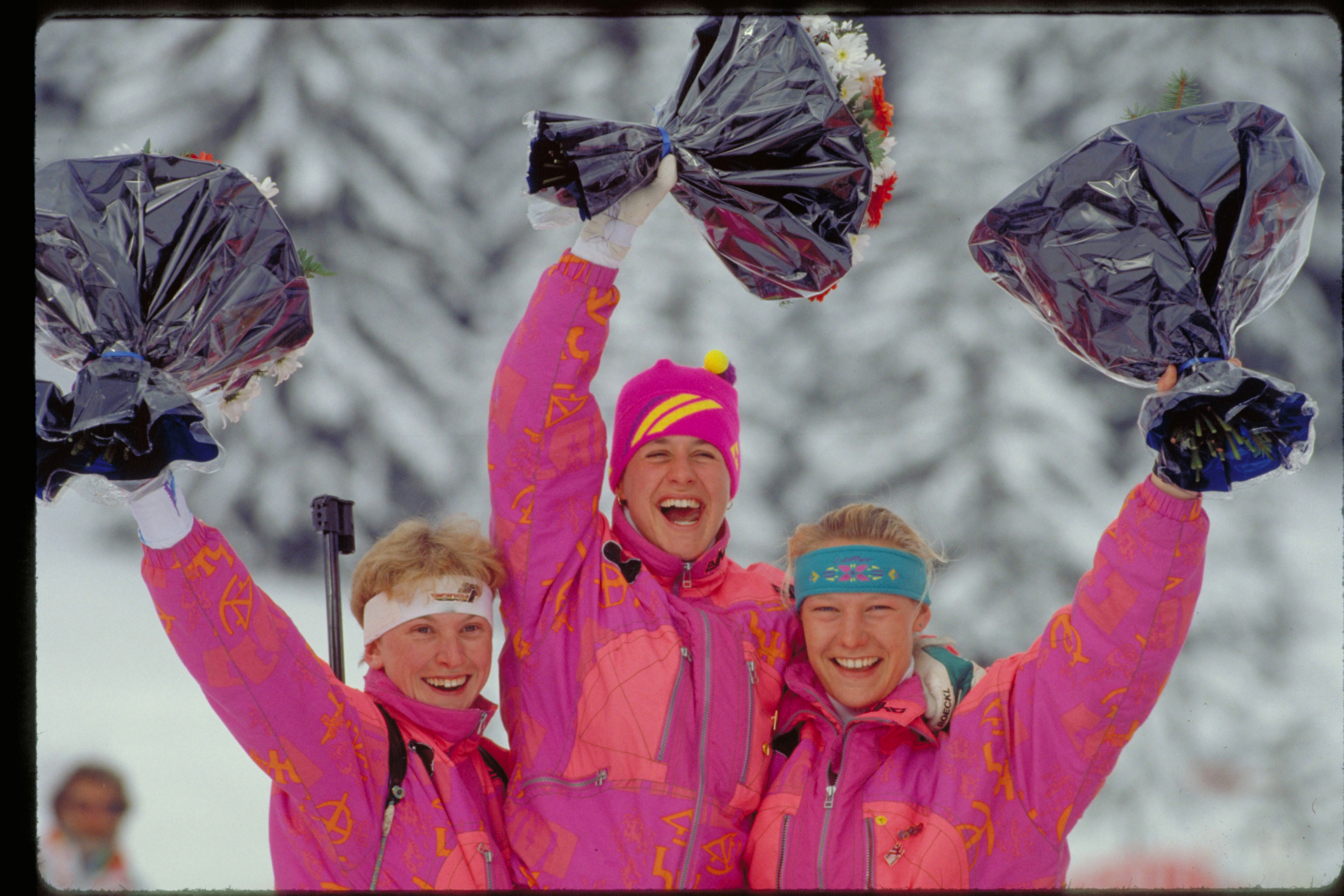
As the sport expanded and developed, the first World Championships for women were held in Chamonix, France in 1984. The women's and men's championships were combined in 1989 and are now conducted over 11 days in every non-Olympic season. Thirty-four nations competed at the 2025 IBU World Championships, a testament to the sport's continued development and inclusiveness.


IBU and the modern biathlon
Once the IBU was founded in 1993, biathlon evolved even faster with the introduction of the pursuit and mass start in 1996 and 1999, the mixed relay and the single mixed relay in 2005 and 2015, respectively.
These various competitions comprise the program for today's LaVita IBU World Cup season that spans late November to mid-March. The season includes three competition weeks in November/December, January, and late February/March:
- IBU World Championships or Olympic Winter Games, usually covering much of February
- The second-tier IBU Cup circuit prepares and develops athletes for the World Cup, running simultaneously each winter
- The IBU Junior Cup (for athletes under age 22) offers a compact schedule of international competitions each winter for the sport's future stars
' gradientUnits='userSpaceOnUse'%3e%3cstop offset='0' style='stop-color:%23009cd9'/%3e%3cstop offset='1' style='stop-color:%23023850'/%3e%3c/radialGradient%3e%3cpath d='M21.4 32.4c0-11.5 9.5-20.7 21.1-20.7 11.6 0 21.1 9.2 21.1 20.7s-9.5 20.8-21.1 20.8c-11.6 0-21.1-9.3-21.1-20.8z' style='fill-rule:evenodd%3bclip-rule:evenodd%3bfill:url(%23a)'/%3e%3cpath d='M42.7 11.5h.5c3.5.1 6.8 1 9.7 2.5l-.4-.2c-2.9-1.4-6.4-1.9-9.8-1.9h-.4c-4.9.1-10.1 2.2-13.5 5.2l-.3.2c-4 3.7-7.1 8.9-7.1 14.8v1.4-1.4c.1-11.4 9.6-20.6 21.3-20.6z' style='fill-rule:evenodd%3bclip-rule:evenodd%3bfill:%2384cfed'/%3e%3cpath d='M38.8 24.3c0-.1-.6-.4-.6-.5 0-.1 2-2.2 2.1-2.3.1-.1.1-.4 0-.4-.2-.1-.5-.2-.7-.4-.1-.1-.5-.2-.6 0s-.3.4-.4.5c-.1.1-.3.4-.4.5-.2.3.1.5 0 .9 0 .1-.3.2-.3.3-.1.1-.2.2-.3.4 0 .2-.5.2-.6 0 0 0-.1-.3-.1-.4 0-.1 0-.1-.1-.2-1.5-.6-3.6-1.5-5-2.1-.6-.3-2-.8-2.6-1.1 0 0-.4.2-.6.1-.2-.1.1-1 .1-1.1 0 0 .8-.5.9-.4s0 .6 0 .6l.4.2c1.7.7 4.4 1.8 6.1 2.5.2.1.8.3 1 .4 0 0 .3-.8.6-1.2l.6-1.2c.1-.2.5-.3.9-.2 0 0-3.6-2.2-3.7-2.3 0 0-.3.2-.5.1s.2-.9.2-1c0 0 .9-.3 1-.2.1.1-.1.5-.1.5 0 .1 4.5 2.8 4.6 2.9.1 0 .9-.9 1-1h.9c.1-.1 2.2-2.3 2.2-2.4 0-.1-.3-.2-.3-.3 0 0 1-1 1.1-1 .1 0 1.7.7 1.7.7l-.4.4s-.4-.1-.5 0c-.1.1-2.3 2.4-2.5 2.7-.1.1.2.4.2.5 0 .1-.2.5-.1.5h.5V19c.3-.4.8-.7 1-.7 0 0 .2-.1.5-.1h.5s.1.1.2.1h.2c.1 0 .1.2.2.2l.2.1s0 .1.1.2c0 .1.1.2.1.4 0 .1.1.4.1.5 0 0-.1 0-.1.1s0 .2-.1.2c0 .1-.1.2-.2.3-.3.3-.5.4-.5.5 0 .1.2.2.3.6 0 .4 0 .7-.3.9-.2.1-.4.2-.5.2-.1 0 0 .1-.1.1l-.9.6c-.3.2-.9 1-1 1.2-.2.2-.5.6-.7.8h-.6c-.1.1.3.7.4.9.2.6.6 1 .9 1.6.1.3.3 1.6.3 1.9 0 .1 0 .3-.1.5-.1.4-.2.7-.2 1.1 0 .6-.2 1.1-.5 1.5-.1.3-.3.6-.4.8-.2.2-.1.4-.1.5 0 .2-.3 1.1-.4 1.5-.2.6 0 .8.2.9.1 0 .2 0 .3.1.2.1.3.3.1.7.3 0 .6.1.9.1 1.8-.2 6.6-1 7-1.1 1-.2 1.8-.7 1.9-.7.1 0-.1 1-.6 1.2-.3.1-.9.3-1.3.4-.4.1-18.8 3.1-18.8 3-.1-.1.3-.8.4-.9.2-.1 5.5-.9 7.3-1.3.4-.1 1.1-.3 1.4-.3 0-.1-.8-.2-.8-.4-.1-.5.6-1.5.7-1.9.1-.4.4-1.1.4-1.3 0 0 .1-1 .3-1.7.1-.4.5-.9.6-1.2.2-.4 0-.9-.3-1.4-.2-.3-.6-.5-.8-.7-.3-.4-.7-.7-1-1.1-.1-.1-.2-.2-.4-.1-1 .5-1.5 1.3-2.2 2.1-.4.5-1 1-1.6 1.4l-.9.6c-.1 0-.2.1-.3.2-.3.7-1 1.2-1.5 1.7-.3.3-.9 1.1-.9 1.2v.4c-.1.2-1.2 1.4-1.4 1.6-.1.1-.5.4-.6.4-.2 0-.4.3-.6.4-.2.2-1.8 2.1-2.2 2.6 0 0-.6.8-.8.9-.4.3-.9-.1-.9-.2 0-.2.6-.8.7-.9.5-.7 2.2-2.7 2.4-3v-.5c0-.1.1-.3.1-.4 0-.1.2-.3.3-.4.2-.2.6-.8.8-.9.1-.1 1.1-1 1.3-1.4.2-.2.4-.4.5-.7.3-.4.5-.9.9-1.3.2-.2.5-.5.8-.6.7-.5 1.3-1.1 1.7-1.8.3-.7.6-1.3 1-1.9.2-.4.6-.7.9-1.1.2-.2.4-.5.5-.8.3-.7.5-1 .5-1.1z' style='fill-rule:evenodd%3bclip-rule:evenodd%3bfill:white'/%3e%3cpath d='M20.2 29.4C11.5 34.6 7 40 8.1 43c1.7 4.7 17.2 5.8 37.6-1.2C66 34.9 77.6 24.7 75.9 20c-1-3-7.7-4.5-17.6-3.4-.8-.8-1.7-1.5-2.7-2.2 32.9-5.1 34.2 17.1-8.5 31.5C4.6 60.3-8.3 42.1 20.9 26.1c-.4 1.1-.6 2.2-.7 3.3z' style='fill-rule:evenodd%3bclip-rule:evenodd%3bfill:%23d5e000'/%3e%3c/svg%3e)


Phenomenal popularity
The addition of the fast-paced, easy-to-understand "made-for-tv" pursuit and mass start spurred biathlon's rise as winter's "must-see tv." Television audiences have grown exponentially annually since the turn of the 21st century.
Biathlon's growing popularity spurred the growth of super stadiums like Antholz, Ruhpolding, Holmenkollen, Nove Mesto na Morave, and Oberhof that host tens of thousands of fans every season.
The modern sport has matured from a lonely ski and shoot in the forest into an attractive sports phenomenon driven by technical innovations, television coverage, charismatic athletes, and exciting competitions enjoyed by millions worldwide. Yet the premise remains the same as its earliest incarnations: ski, shoot, repeat!


