When Is the Right Time to Retire? Three Biathlon Champions Share Their Answer
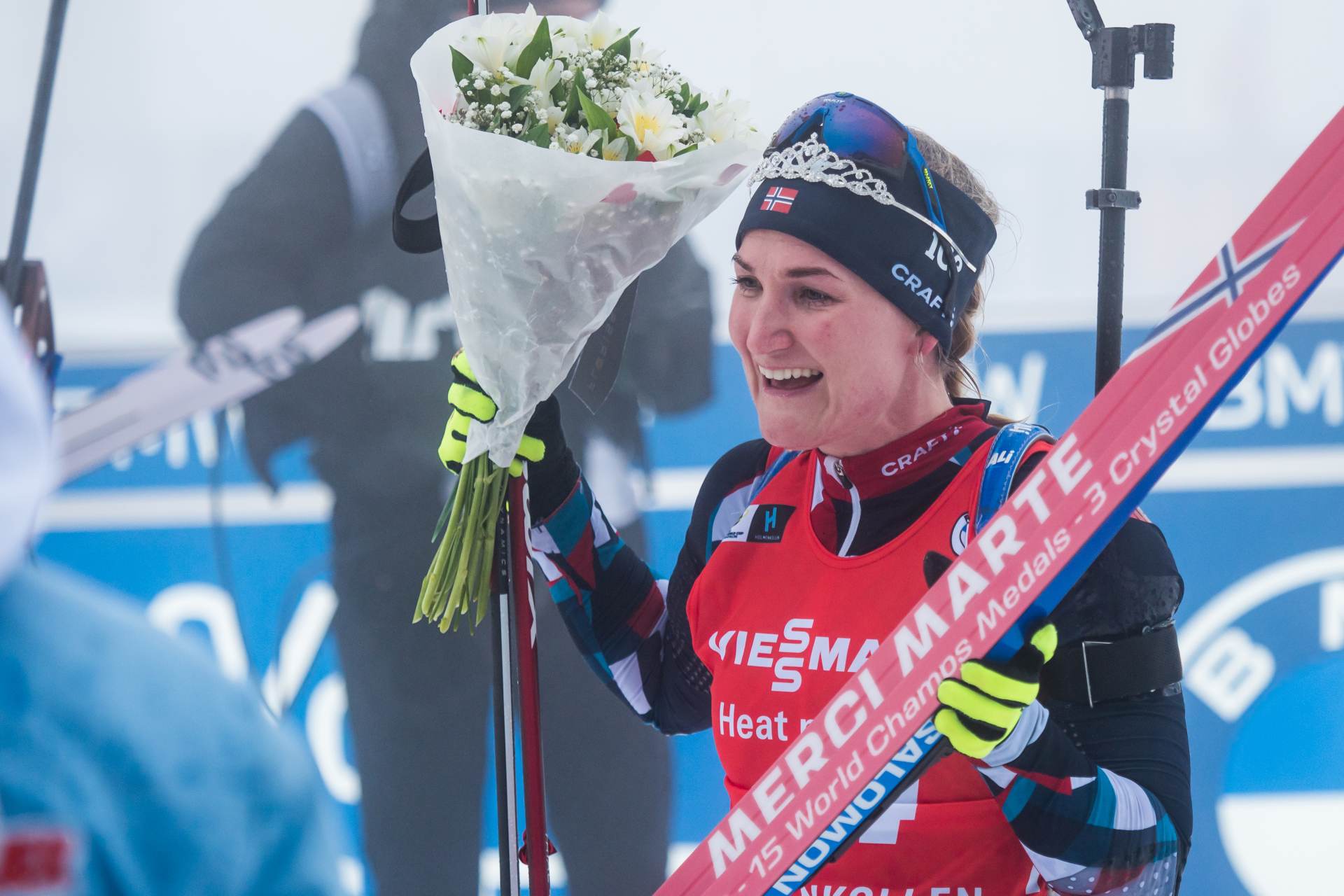
Calling time on a career is a big step in the life of an athlete. It’s a big change and for many a step into the unknown, which can be both scary and thrilling. As the sun is setting on the 2025/2026 biathlon season, we talked to former biathletes Marte Olsbu Roeiseland, and Weronika Nowakowska, as well as freshly retired Paulina Batovska Fialkova, about how to best be prepared for this inevitable moment in an athlete’s career.
The “right time” is internal, not external
“I think you have to feel it with your heart,” explained Marte Olsbu Roeiseland, who retired in 2023 after closing second in the mass start of Oslo Holmenkollen: “I was so sure I was going to retire after the Olympics of 2022, but my heart's said no. And it was the right decision to take one more year, in which maybe I was not that good, but I could enjoy every race.”
Weronika Nowakowska also thinks that an athlete has a feeling for when it is time to hang the rifle: “You have to be in connection with yourself. I think that's super important.”
“If you feel for a longer time, training and competing don’t make you happy, if you are not excited or you are not dreaming of achieving results, maybe it's a good moment to quit.”
“If biathlon were only about competing, I would continue for sure,” admitted Batovska Fialkova. “But it's a lot of training, and I won't miss training. I want to stay at home… no travel, no stress with schedules and with logistics.”

When life outside sport becomes more important
Despite biathlon being a central part of their existences, life often takes priority, and all three women agreed that this was also a clear sign for them to move on from professional sport.
“You must set in your mind what you want to be first. And I wanted to be first mother and second a biathlete,” explained Batovska Fialkova, who competed for two seasons after giving birth to her first child. She managed to return to the podium on the World Cup, including this season, but she knew that her margins were really small.
“Because of that, I'm maybe giving only 80, 90% of myself to biathlon, and that's not enough. I know that's not enough for biathlon. You have to be 100% or more to be a top athlete.”
It was the same for Roeiseland during her ‘extra’ season in 2022/2023: “You know, 80% is not good enough. There are too many good athletes. I felt that I couldn't give it 100% anymore, then I knew it was better to do something else.”

The athletes who transition best prepare early
For Nowakowska, the key part of a happy and smooth transition from professional sport to a normal life is to be prepared.
“I felt after my medals that I wanted to take care of the other parts of my life. Not only sports. I opened a cafe bar with my sister… so I knew that when I finish, I will have some things to do.”
The Pole said she was not sure that this would be her path, but it helped her have the financial and psychological stability to take all future steps, including building a family and studying.
“I deeply believe that it's better to prepare somehow; that’s my suggestion to every athlete: prepare much earlier than you think you would need it and take care of yourself, not only in your role as an athlete.”
‘Who am I without sport?’
One of the hardest parts of retirement is often around this question. Athletes tend to define themselves with their sport – just like everyone else with their jobs – which makes it even more difficult to start a new path.
“I see many athletes who push themselves much longer than maybe they should,” admitted Nowakowska: “because they are afraid to have this normal life: bills, rent, schedule, planning, or simply buying your clothes… these are all things that are almost foreign to you during a career”.
“I very often say that this is my second life. Like life after life,” admits laughing Nowakowska. “I think that being an athlete is a huge part of our personality, but it shouldn’t be the only one. Otherwise, when you are 30 or more… you have to find yourself as a person, in different roles.”

Biathlon will always remain
For all three champions, finding a path beyond competition was key — but so was knowing that biathlon would remain part of their lives. For Weronika Nowakowska and Marte Olsbu Roeiseland, that means working as TV experts, while Paulina Batovska Fialkova hopes to support the next generation in Slovakia.
“For now, I want to have a break from work, like from biathlon. And, but I will stay, for sure, somewhere around the sport. If they need me, I will be here,” the Slovak said. “But first, I'm looking forward to a bit of peaceful life. I want to stay at home for a longer time and be with my daughter and my husband.”
And in that sense, retirement is not a goodbye to biathlon — but a different way of staying close to it, trackside, from a TV studio or simply – as Dorothea Wierer admitted in another interview in Holmenkollen – from the comfort of the sofa at home.


 Inscrivez-vous à notre newsletter
 Suivez-nous sur :


