French Training Camp Diary: Cycling Alpe d’Huez, Rollerski Sprints, Running, 50/50
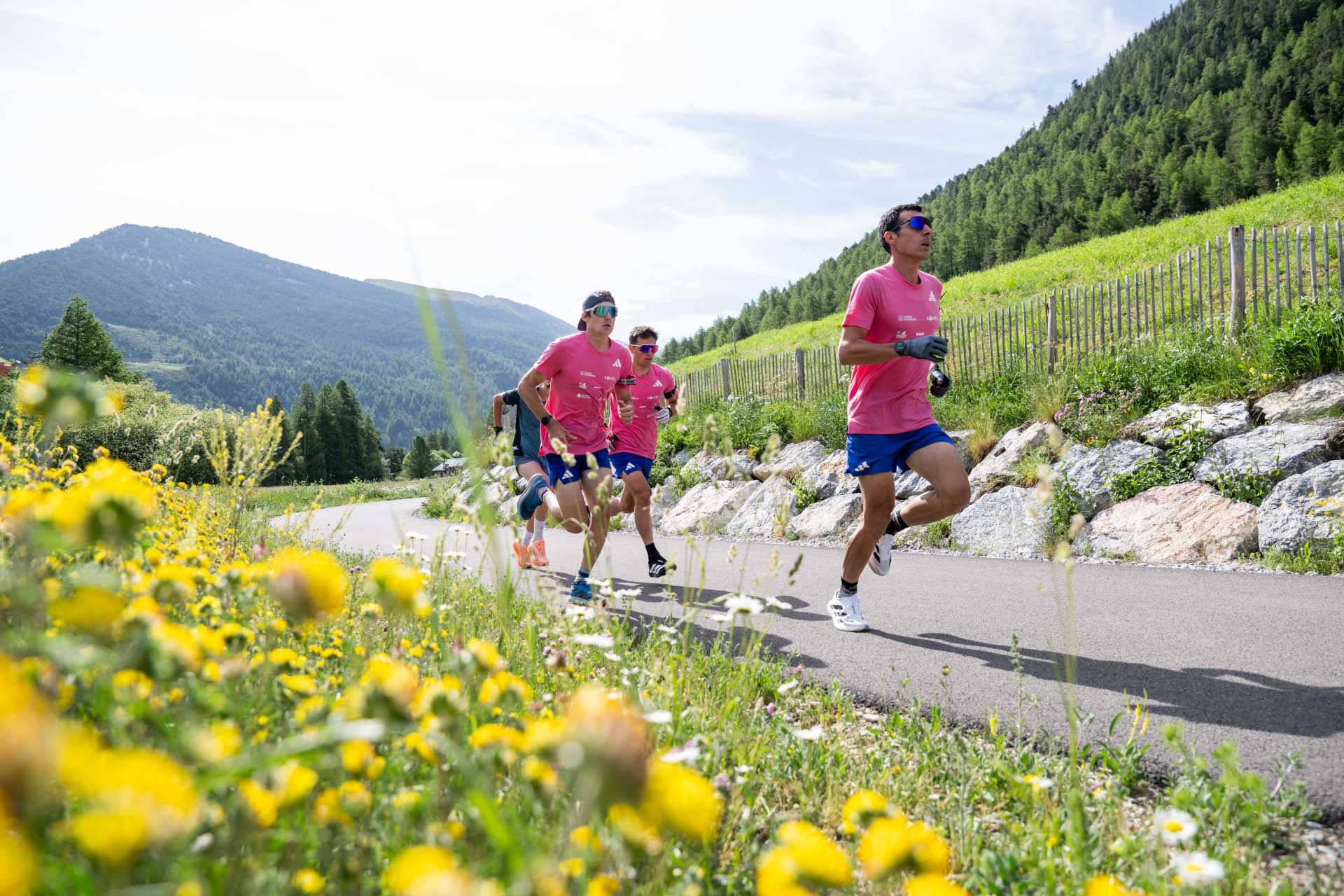
The French men’s team literally hit the road at full gas with their first extended training camp at Ceillac in the Provence-Alpes-Côte d'Azur Region of southeastern France. Biathlonworld was along for the ride and this is what we saw.


300 km Cycling “Warm-up”
Usually, teams drive to camps but this time the trip to the 1600-metre valley was human, not gas-powered. On a warm Friday morning, the A-team’s Quentin Fillon Maillet, Emilien Claude, Oscar Lombardot, and Gaetan Paturel along with the B-team cycled from Chambéry, covering 170 km with 4000+ metres of climbing to the legendary Alpe d’Huez, spending the night, and covering another 130 km the next day adding another 3000+ metres of climbing. The last 13 km, switchback-filled, to Ceillac resembled Italy’s legendary Stelvio Pass. Shooting Coach Siegfried Mazet explained, “We wanted to do something different instead of just six days mostly on and around the shooting range. Some of the guys had never been up the big climbs before so it was a great experience.”


New Olympic Cycle “Changes in our training plan”
The long ride was the warm-up to six days of shooting range work combined with mountain tours. Head Coach Simon Fourcade added, “With a new Olympic cycle, we will make some changes in our training plan, like still doing some altitude but not focusing on it like we have done for the past three years.”
Day 1 on the Range: 10 X 150 Sprints with Shooting
Although the season is still far away, on the camp’s second day, intensity with shooting was on the menu. Intensity meant after warming up, 30 minutes of speedy range loop one shot drills, focusing on controlled breathing getting ready for the actual training session. Then it was all-out sprints a two-lane 150-metre straightaway into the range, a 5-shot bout with controlled breathing, re-rack the rifles, and repeat 10 times. Every sprint was a fight for the win to the last metres. Mazet admitted, “It was the first shootings with intensity, so some had a hard time making the quick adjustment from the hard sprint to controlled accurate shooting.” After lunch and some rest, the day concluded with an easy 2-hour hike up to a nearby peak and back.
Day 2 on the Range: Running Intervals

A second day of intensity followed the season’s first hard session. Rollerskis were replaced with running shoes and instead of warm-up shooting drills, running drills opened another clear day. Suddenly, biathletes resembled something like runners at a Kenyan or Ethiopian training camp with high knees, butt kicks, a-skips etc. After a quick zeroing and 15 more minutes of warm-up, three groups of four attacked a 600-metre loop with a shooting bout on each loop and a short walk recovery back to the rifle rack. Unlike the previous day’s sprints, the pace was steady and controlled, with more targets closing easily. The coaches were smiling after the session with Mazet adding, “I am happy, not just with the results but how everyone is so focused and engaged.”


After the second consecutive intensity day, everyone gladly hopped in the vans for the ride back (instead of rollerskiing) to the rented house for lunch, some lounging in the sun, and a game of darts. Five tough days were rewarded with an afternoon off.
50/50 Day
Another sleep, breakfast and back to the small Ceillac 16-point range for what Mazet calls a “50/50,” 50 shots on paper, 50 shots on metal, with long rollerski loops over almost 3 hours. “I do not care how fast, just hit the targets. First you hit the targets, then you shoot faster. If you cannot hit the targets, there is no reason to shoot fast!” Along the way, there were comments and learning moments although the coach admitted, “I should keep my mouth now and discuss later!”
“Really good camp…in a good place”

While Mazet monitored the range, Fourcade was out on the roller loop, filming and analysing technique, all part of the early season process. Regarding this first full-scale camp, he added, “It has been a really good camp…in a good place we like and do not come to often. Doing something different is part of our new strategy as well as working with the B team, sharing the tracks and cycling routes, building team spirit and getting in some good work on the shooting range.”
And the process restarts once again: eat, sleep, train. Biathletes are made in the summer!
Photos: IBU/ Nordic Focus, Louis Schwartz/French Biathlon, Jerry Kokesh


 Inscrivez-vous à notre newsletter
 Suivez-nous sur :


