New Stars, Same Momentum: China’s Para Biathlon Rise Continues
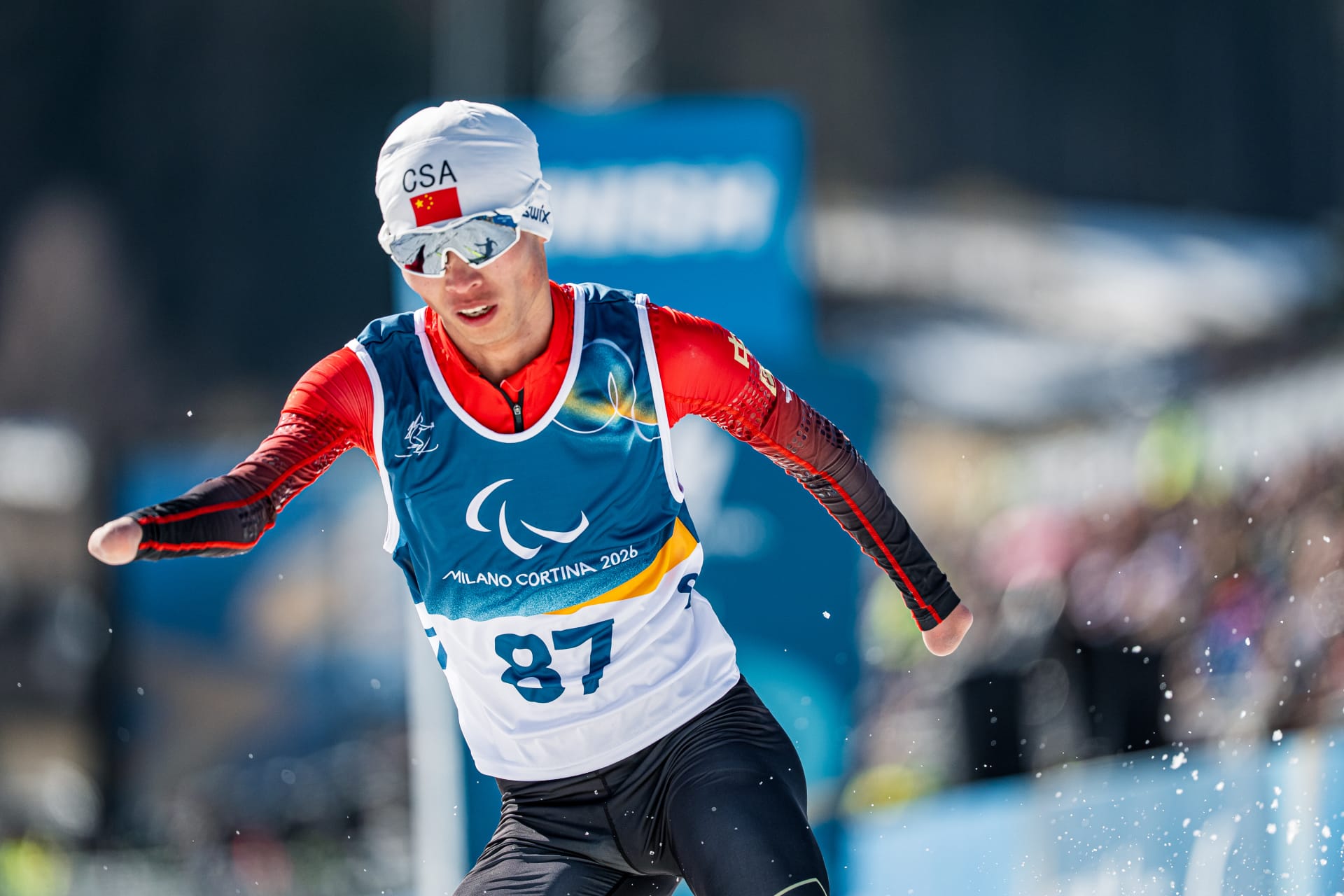
Chinese para biathletes were one of the biggest revelations of the Beijing Games, winning their first 12 Paralympic medals. However, they still finished behind Ukraine in the medal standings. In Val di Fiemme, they have nearly doubled that tally in just two races, adding another 11 medals to their collection. Jiayun Cai and Yue Wang will compete on Friday for their third gold medals of the week, battling for the title of the biggest stars of the event.
Not much can be said about Chinese para biathlon before 2022. One story from the early years has almost become legendary: when Chinese para biathletes arrived at the 2002 Salt Lake City Paralympic Games, they discovered only on site that the competition would be held using the skating technique rather than the classic style they had prepared for. After this difficult beginning, they returned to the Paralympic biathlon stage in 2018 in PyeongChang, but their results still fell well short of the podium.
The prospect of hosting the Olympic & Paralympic Games on home soil in 2022 prompted China to launch an ambitious development program several years in advance. In biathlon, the project included world-class coaching staff, with Olympic champions Ole Einar Bjerndalen and Daria Domracheva joining the team, supported by renowned shooting coach Jean-Pierre Amat. The project was discontinued shortly after the Beijing Games, and much of the progress achieved during those years was lost. In para biathlon, however, the team that impressed four years ago appears even stronger in Val di Fiemme.

This was already foreshadowed by the Chinese national team’s only World Cup appearance this season in Notschrei. Chinese athletes secured eight victories, nine second places, and nine third places there, producing one of the strongest team performances in recent World Cup history. Their depth and versatility are further demonstrated by the fact that China is the only team with representatives in all three categories in both the men’s and women’s competitions. And they are competitive in all six classes. In Val di Fiemme, the only category in which they have yet to win a medal is women’s sitting. Still, even there they will have a chance in Friday’s Sprint Pursuit, as Yilin Shan has already stood on the World Cup podium in this event earlier this season.
The core of the team is formed by medalists from Beijing. Zixu Liu, Mengtao Liu, Zhiqing Zhao, and Yue Wang all repeated their success from four years ago and stood on the podium again. Wang, competing in the women’s VI category, has already won both races in Val di Fiemme, and no other athlete has yet won three medals in this category.

“Of course, those two wins bring me a lot of confidence for the last race. As an athlete, I always want to win and perform at my best. But I don't want to put too much pressure on myself - I want to relax and enjoy these Games. I was very young at the Beijing Games and not yet mentally mature. After those competitions, I doubted myself, but with the support of my coach, my family, and the people around me, I grew a lot. Over the past four years, I have gained a lot of experience, which made me mentally stronger and helped me perform better here,” said Wang.
Alongside her, Jiayun Cai has also claimed two victories. In the men’s standing category, he faces some of the most decorated athletes in the sport, including Mark Arendz, Grygorii Vovchynskyi, and Benjamin Daviet. Cai, who made his international debut in December 2024, had to overcome several challenges at the beginning of his para biathlon journey, including repeated frostbite during training. Born in southern China, where snow is rare, he had to adapt to harsh winter conditions. In Val di Fiemme, however, the weather works in his favour - the days are sunny, temperatures rise above freezing, and the air even smells of sunscreen.

Another athlete making his Paralympic debut who reached the podium at his first Games is 39-year-old Zhongwu Mao, who won silver in the men’s sitting 12.5 km race.
“The silver medal is very meaningful for me. It encourages me to keep improving, and I’m confident that in the coming days I can become even stronger. These Paralympics are historic for the Chinese team. They will inspire many people living with disabilities to pursue a better life and follow their dreams,” said Mao.
One of the biggest surprises came in the men’s VI individual event, where Hesong Dang claimed gold. The 26-year-old had never previously stood on the podium in an international competition, yet on Sunday, he dominated the race, winning by more than two minutes. After the finish, he revealed his simple formula for success:
“I trained day after day because I really wanted to win a gold medal or stand on the podium. I started very early every morning and trained until eight in the evening - every day. Sometimes I thought about giving up, but because I had such a big dream, I kept going,” said Dang.
Athletes are besieged by media in the mixed zone, with Chinese journalists the most numerous in Val di Fiemme - and having the most reason to celebrate. They may have even more to cheer about on Friday during the Sprint Pursuit, the final biathlon event of these Paralympic Games.

Photos: IBU | Barbieri


 Inscrivez-vous à notre newsletter
 Suivez-nous sur :


