Coach, Guide, Ski Technician: The Multi-Tasking Reality of Para Biathlon
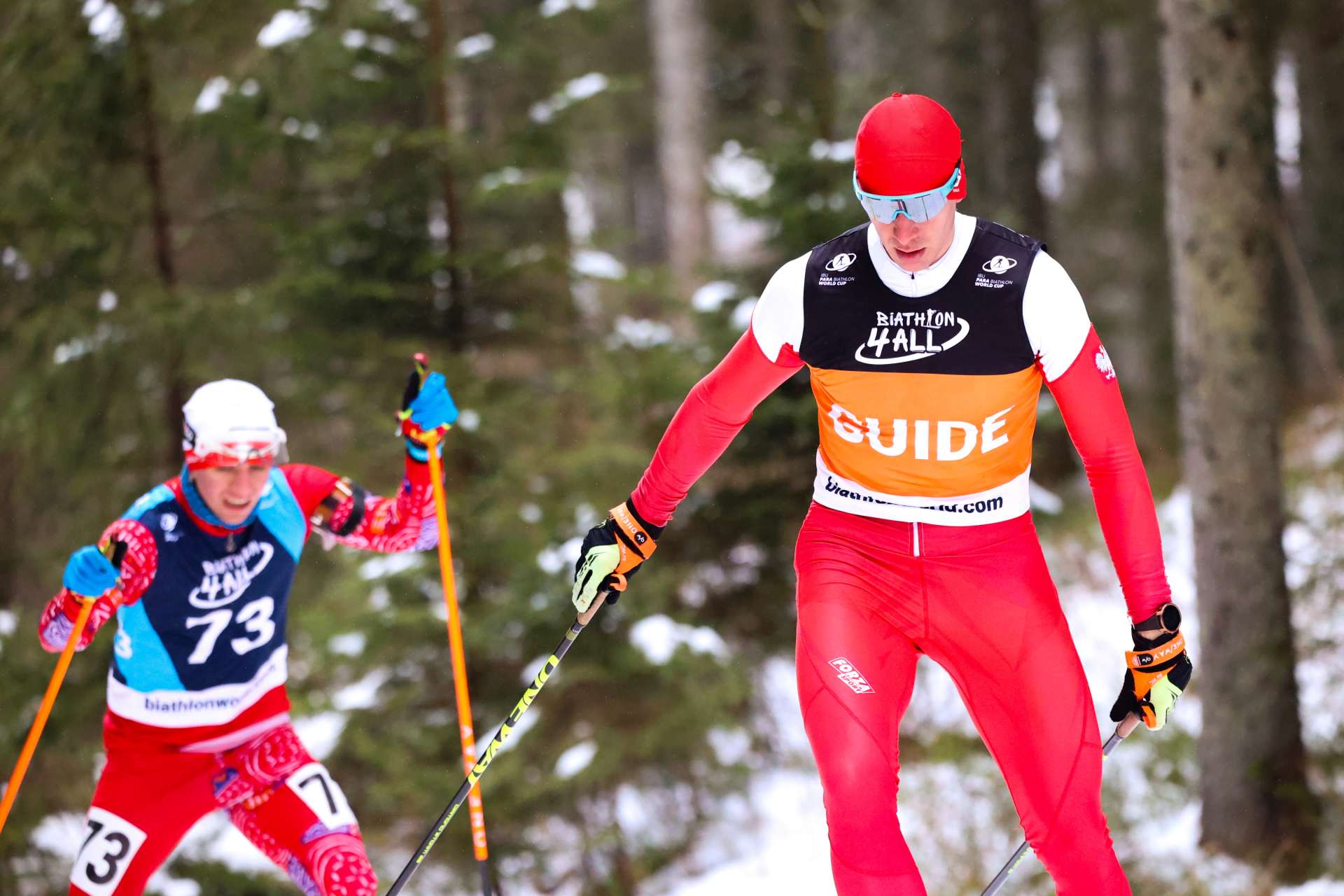
Para biathlon teams may be small, but behind the scenes, they are powered by people willing to take on almost every role imaginable. Few embody that spirit more than Jakub Twardowski - coach, guide, ski technician, and logistics coordinator all at once.
While Poland has a history in para biathlon’s standing category - highlighted by Bogumiła Kapłoniak’s Paralympic bronze in 2002 and Katarzyna Rogowiec’s five World Championship medals between 2005 and 2011 - the country’s current strength lies primarily in the vision impaired category. For the past eight years, one of the key figures driving its development has been Jakub Twardowski, a former cross-country skier who never originally planned to work in para biathlon.
“I started cross-country skiing when I was 12 years old. Biathlon was never really my sport, although I once competed in a shooting triathlon, so I understood the basics of shooting. After finishing my own racing career, I remained active recreationally until a phone call in 2017 changed everything. The Polish para biathlon team was searching for a guide for Piotr Garbowski, and our cooperation began.”
Together, they competed at the 2018 Paralympic Games in PyeongChang. Initially working only as a guide, Twardowski gradually took on more responsibilities and has combined the roles of coach and guide for the last six years. In many teams, those jobs alone would already represent a full workload. In the Polish para biathlon team, however, they are only part of the daily reality.
/Sprint%20Pursuit/DSC_2260)
“It’s impossible to divide it into percentages because every day looks different,” he said. “Sometimes I focus completely on logistics and organizing trips, while other days are fully about coaching or ski preparation.”
Twardowski is a qualified coach, having graduated from the University School of Physical Education in Kraków and completed coaching internships under renowned Polish coach Aleksander Wierietielny, who worked with athletes such as biathlon world champion Tomasz Sikora and Olympic cross-country skiing legend Justyna Kowalczyk-Tekieli.
“During races, I mainly work as a guide. During technical or strength sessions, I focus more on coaching. And whenever necessary, I become a ski technician,” he explained. “On race days, we usually get up around 7 a.m. and are in the wax cabin shortly after breakfast. Since visually impaired races often start between 1 and 3 p.m., we spend most of the morning testing skis and waxing together with our second guide, Michał Lańda. After the race, we still need to clean the equipment, prepare everything for the next day, and tidy up the wax cabin. It’s basically a full day of work from morning until evening.”
Because Poland does not have the same staffing resources as the biggest nations, athletes sometimes head to zeroing on their own while the support team continues preparing skis.
As if all these responsibilities weren't enough, Twardowski serves as a guide for not one, but two athletes. How is this possible? Piotr Garbowski, with whom he has been working the longest, has recently shifted his focus entirely to para cross-country skiing. Since the calendars of both disciplines often overlap, Twardowski works with a different athlete almost every week during the winter season.
/Sprint/Blazej_Bienko_POL_w_guide_pdoyle)
In para biathlon, Twardowski partners with 22-year-old Błażej Bieńko, whom he sees as having major potential. It was reflected in Bieńko’s fourth place in the overall World Cup standings this winter.
“We are still a very small team, which makes Błażej’s fourth place even more special,” Twardowski said. “He is an extremely talented athlete, especially in shooting. At the same time, he knows that endurance sports require a lot of volume training, and that is not necessarily the type of training he enjoys the most. This year’s Paralympics were his first, so his future is still wide open. If he keeps training hard and stays motivated, he can achieve a lot.”
Para biathlon in Poland continues to face major structural challenges.
“Eight years ago, we had maybe two rifles for visually impaired athletes in the entire country. Today we have seven or eight, so progress is happening, but we still lack proper infrastructure. We do not have adapted shooting ranges for visually impaired athletes. Many of them lack safe places to train. Roller ski training on public roads or short bike paths is difficult and often dangerous. The dream would be to have one central training center for athletes with disabilities - something similar to the Ukrainian center in Sianky, where athletes can live, train, and develop in one place.”
Despite the obstacles, Twardowski remains optimistic about the future. Poland’s development programs continue to introduce young visually impaired athletes to para biathlon through training camps and talent identification projects.
“We already see several promising athletes,” Twardowski said. “But many visually impaired children are also involved in music, arts, or rehabilitation programs, so it is not always easy to convince them to commit to elite sport. But we definitely see potential, and we want to keep developing the sport further.”
/Individual/Bienko080126br923)
Perhaps one opportunity for the future of para biathlon in Poland could be the expected closer integration with the Polish Biathlon Association. More and more national federations responsible for able-bodied biathlon are also taking over para biathlon programs - often with impressive results. A prime example is Czechia, which built a Paralympic medal-winning team within just two seasons. Whether Poland can follow a similar path may become clear over the next few years.
Photos: IBU | Wlaźlak, IBU | Kacin, Reichert | IBU, Doyle | IBU


 Abonniere unseren Newsletter
 Folge uns auf


