A Fan and TV Favourite

A Fan Favourite: Stadiums Full of Excitement and Emotion
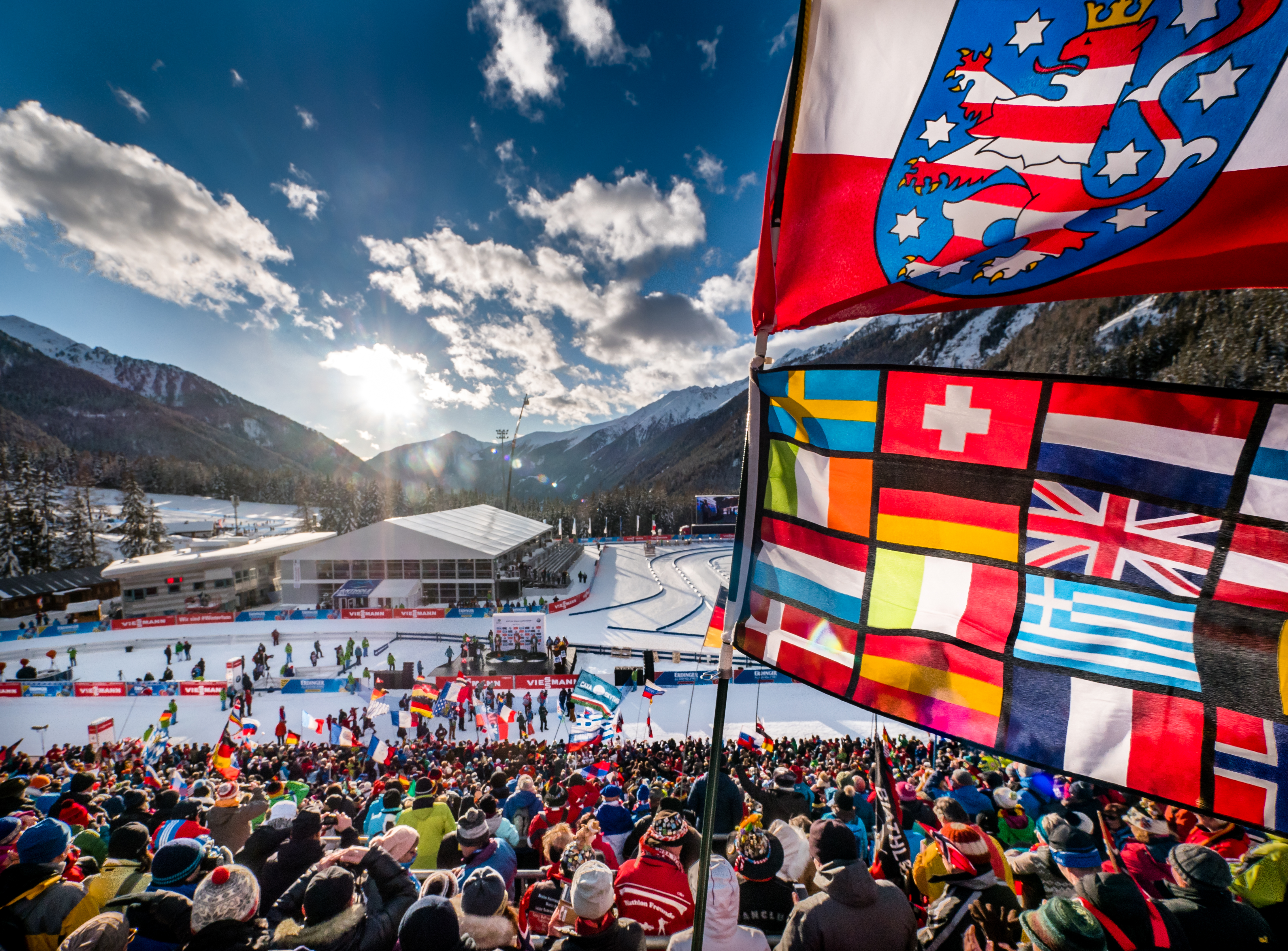
Biathlon is one of the rare winter sports where fans are not just spectators — they are part of the race. From packed grandstands to snow-covered forests lined with cowbells and flags, biathlon venues brim with energy from start to finish. Tens of thousands of fans follow every shooting in silence, only to explode in celebration seconds later. It's this joint tension and release that makes biathlon so addictive to watch live.
Fans can follow multiple athletes at once, witness the consequences of every hit or miss instantly, and feel connected to the action no matter where they stand. National pride runs deep, but so does respect for the sport — clean shots are applauded irrespective of the flag or the bib.
Biathlon crowds are known for their warmth and creativity: costumes, painted faces, and fun atmospheres are the norm. Whether in legendary venues like Holmenkollen, more recent additions like Nove Mesto and Le Grand-Bornand or biathlon strongholds Oberhof, Ruhpolding and Antholz: the bond between athletes and fans is visible and genuine. When biathletes say they "feel the energy of a stadium," it's not a cliché — it's fuel.


A TV Favourite: Drama You Can't Script

Biathlon started as a sport with time trial and relay competitions – but quickly understood the appeal of head-to-head racing and mixed relay competitions, perfectly catering to tv audiences and broadcasters with competitions that never outstay their welcome. The sport combines constant movement with clear, easy-to-follow moments of high drama. Every race tells a story: leaders emerge, underdogs surprise, and everything can change in the space of one single shot.
What makes biathlon especially compelling on screen is its clarity. Targets turn black or white. Misses are instantly punished. Time gaps shift in real time. Modern broadcasts enhance this with data, split times, on-screen graphics, and various camera angles that bring audiences closer than ever to the action.
Biathlon also thrives on unpredictability: weather, wind, pressure, and fatigue ensure that no result is guaranteed until the very last shot. A gold medal favourite can fall apart; a newcomer can rise in seconds. This combination creates genuine sporting drama — the kind that keeps an average of 6.2 million hooked every single World Cup week and drew the attention of 45 million fans worldwide during the 2025 World Championships!