Oberhof: Germany’s Winter Sport Powerhouse
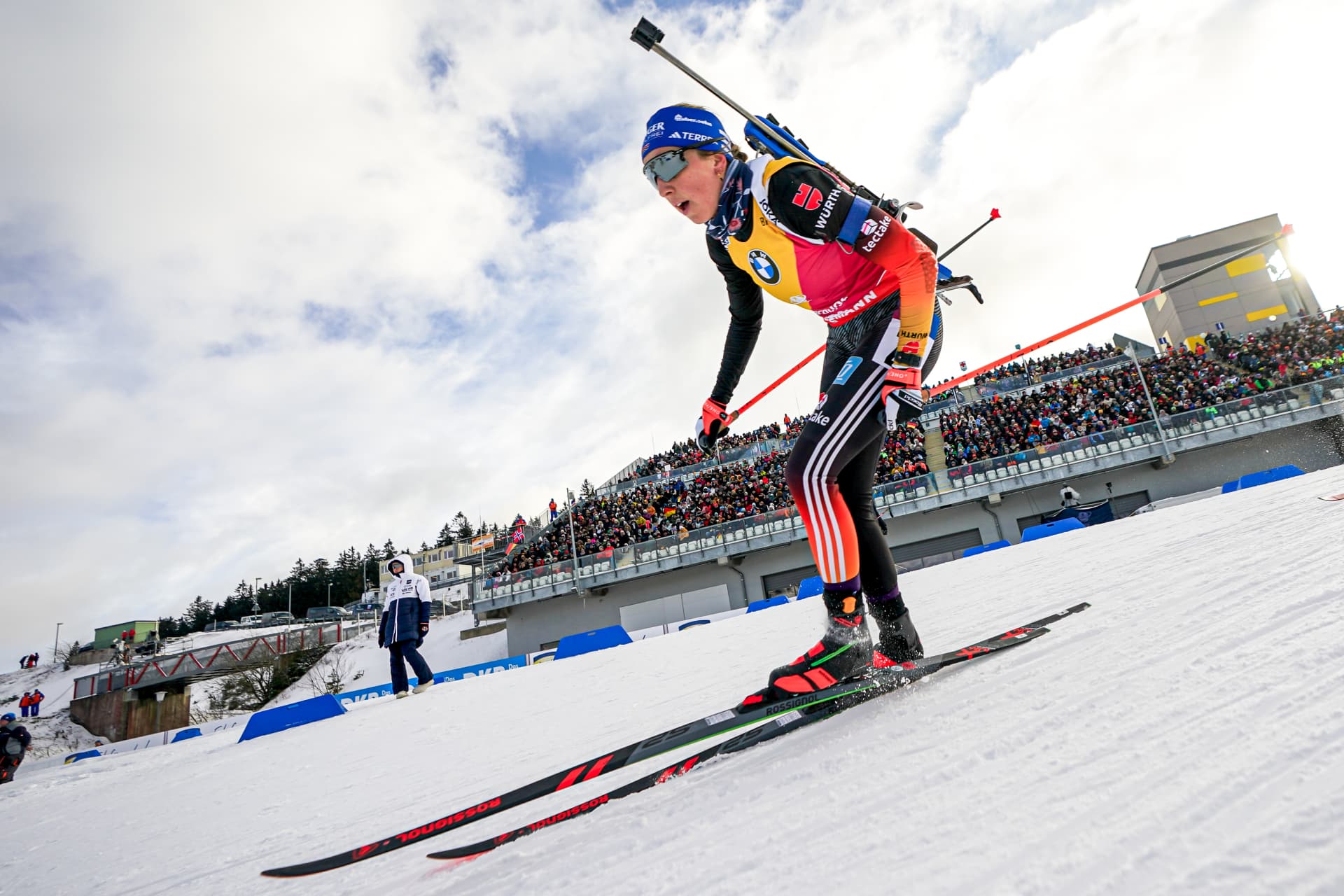
Have you ever heard the connection between Oberhof and fog? This small Thuringian town isn’t just shrouded in mist — the weather shapes every race, adding drama to decades of Biathlon World Cups, cross-country battles, and luge feats. Champions are made here, fans are thrilled, and winter sport history is written year after year.
Europe‘s Classic Battleground in the Forest
Tucked among the dense Thuringian Forest, the Arena am Rennsteig is one of biathlon’s most atmospheric and tradition-rich venues. Sitting between 774 and 839 metres above sea level, the stadium accommodates up to 20,500 spectators — 13,500 inside the arena and another 7,000 along the tracks — a setting famous for its roaring, weatherproof crowds.
The roots of today’s biathlon complex reach back to the early 1980s. Inspired by Frank Ullrich, East Germany’s Olympic champion from Lake Placid, the idea of building a dedicated biathlon stadium at the Grenzadler took hold. By 1982 the first facilities were completed, including a world-first innovation: a fixed target system that helped redefine the sport and in 1983 hosted its first major competitions.
Ahead of its first World Championships in 2004, the venue underwent a sweeping modernization, transforming it into a true biathlon amphitheatre with a 105-metre main grandstand and dramatically improving the spectator experience. The biggest leap came with the 2020–2022 reconstruction ahead of the 2023 World Championships. Despite pandemic challenges, the entire complex was completely reimagined - the result is a sustainable, year-round centre for elite winter sport.

Overlooking it all is Flocke, the iconic snowman mascot. A beloved symbol of the town, he comes to life in a biathlon outfit during World Cup events, delighting fans and embodying the spirit of Oberhof’s vibrant winter-sport culture.
A Stage of Champions: Oberhof on the World Stage


The venue has hosted World Cup biathlon races since 1984, with over 30 events and two World Championships to date — the 34th World Cup is set for January 2026. The first World Championships in 2004 drew 206,000 spectators and created lasting memories for home fans. German legends Sven Fischer, Ricco Groß, Frank Luck, and Michael Greis took men’s relay gold, with Groß also claiming individual gold in the pursuit.
Over the years, Oberhof has continued to grow as a biathlon mecca. Known for its foggy, often challenging conditions, the arena even faced weather hurdles in 2016 when the World Cup was cancelled due to mild temperatures. The 2023 World Championships brought another highlight, with 160,000 fans watching Norwegian star Johannes Thingnes Bø medalling in every race he started, while Denise Herrmann-Wick thrilled the home crowd with a sprint title.
Historically, the home nation has clearly dominated the relay events held here, medalling in 32 of 52 competitions held there over the years. On the individual front, Ole Einar Bjørndalen and Magdalena Forsberg stand out as the venue’s top winners.
Oberhof has also produced its own talents. Erik Lesser celebrated only one individual World Cup podium here in 2017, but remains closely linked to Oberhof since his early beginnings. Arnd Peiffer collected multiple podiums here, and reflects on his special connection to the venue:
“I’ve always had a special connection to Oberhof. I raced here for the first time at just 12 years old, and later made my World Cup debut in the relay. I’ll never forget the relief of a clean shooting and the energy of the crowd — this place shaped me as an athlete.”
Vanessa Voigt and Philipp Horn have also earned notable World Cup results and are set to return this year.
The arena remains a key World Cup stop through 2030, moving from its traditional early-January slot to the third trimester to secure more consistent snow conditions.
Where Nature, Heritage and Winter Sport Meet
The town of Oberhof lies at the heart of the vast Thuringian Forest, within a 33,700-hectare UNESCO biosphere reserve, home to over 2,500 animal species living among deep valleys, ridges, and ancient spruce forests. Just above the town winds the legendary Rennsteig, Germany’s oldest long-distance trail: a 169-kilometre route that has inspired local folklore for centuries. And a short drive away rises the Wartburg, a 900-year-old UNESCO World Cultural Heritage site that anchors the region’s history.
The area itself is a playground for winter sport. With the LOTTO Thüringen Eisarena, Oberhof has a state-of-the-art luge track, which is also frequently used by bobsled and skeleton athletes for training runs. In addition, a 1.7 km indoor ski tunnel for year-round biathlon and cross-country training, and ski-jumping hills nurturing Thuringia’s next generation, Oberhof is more than a World Cup venue — it’s a powerhouse of German winter sport.

Photos: Manzoni/IBU


 Inscrivez-vous à notre newsletter
 Suivez-nous sur :


