"I want biathlon and movement to bring me joy again" - How injury has changed Davidova
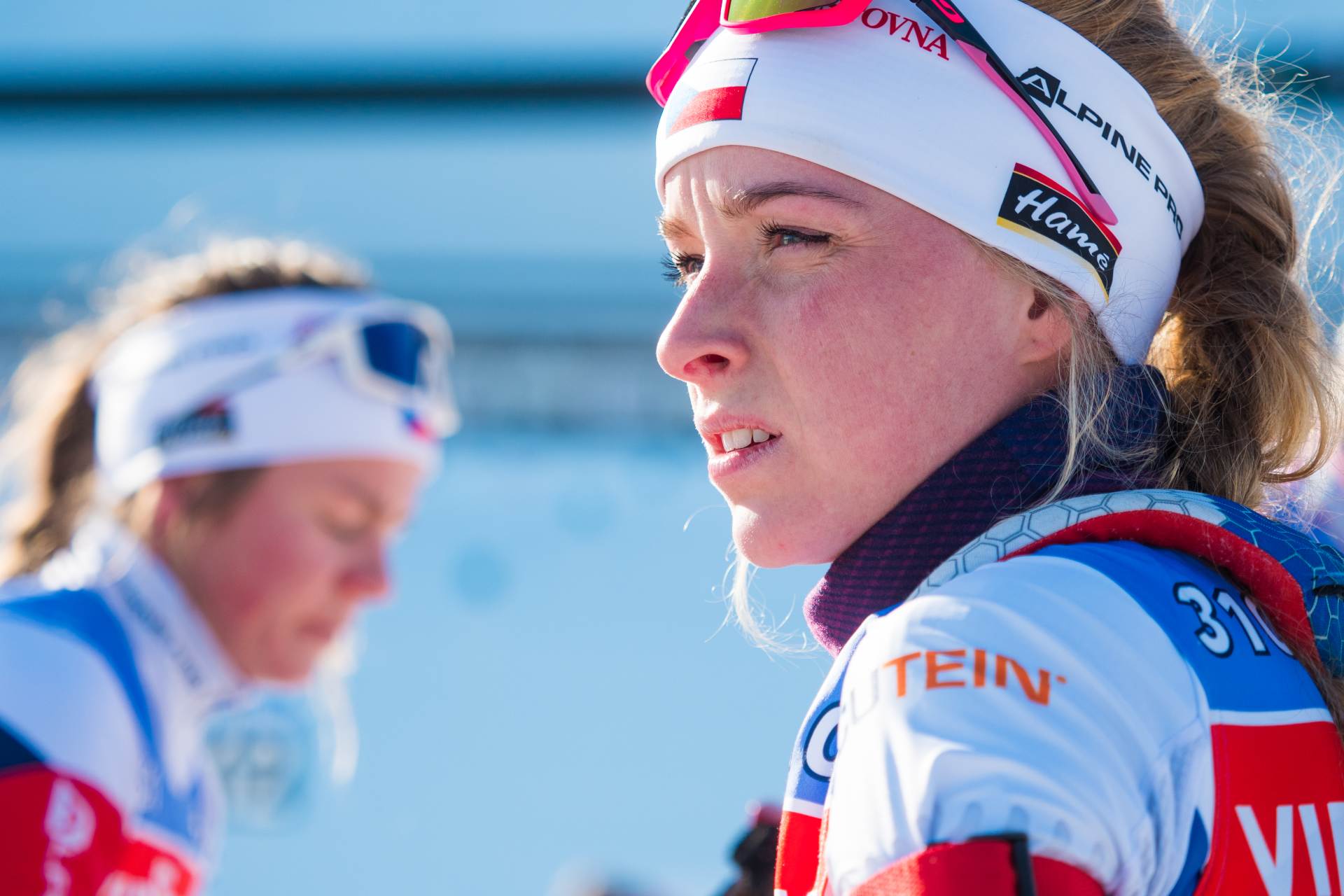
"I had to process that mentally, and honestly, I don't think I ever fully managed to." The words belong to Marketa Davidova, whose last two seasons have been defined not by podiums, victories or championship races, but by watching biathlon continue without her.
For much of the past decade, Davidova was one of the constants of Czech biathlon. A World Cup winner, a world champion in Pokljuka 2021, and a regular among the sport's most consistent athletes, she built her reputation through reliability rather than headlines. Then came back problems, missed races, two surgeries, and a reality she had never experienced before.
Whenever competitions were happening without me, I felt how much I missed being there.
It is a surprisingly vulnerable admission from an athlete who has spent years appearing calm under pressure. Yet perhaps that honesty explains why Davidova remains one of the most respected figures in Czech winter sports, even during seasons when her name rarely appeared in the results.
The hardest moment came at the Olympic Games in Milano-Cortina earlier this year. Most athletes dream of arriving at the Games in peak condition. Davidova arrived knowing her body would not allow her to compete the way she wanted. Despite ongoing back problems, she still fought her way onto the Olympic team and eventually competed in the mixed relay and sprint, the latter proving to be her final race before undergoing a second surgery in April.
The Olympics were probably the hardest. I was in a situation where I could only participate to a limited extent, which made it especially frustrating.

The frustration had been building long before that. After her first surgery in March 2025, daily life became almost unrecognisable. For nearly three months, she relied on crutches. Sitting was difficult. Standing could only be done for short periods. Most days were spent lying down. "The beginning was much harder than I expected, both physically and mentally."
Elite sport teaches athletes to think in terms of constant progress. Faster. Stronger. Better. Recovery offered none of that. Instead, Davidova found herself rebuilding from the smallest foundations.
"Everything after surgery felt like learning from scratch again. Even something as simple as walking felt new." That sentence says more about her journey than any medical update ever could.
For an athlete who spent years pushing her body to its limits, the experience fundamentally changed her perspective. The biggest lesson was not about training or performance, but about patience. "Patience, above all else. It has also taught me humility when it comes to health."
It is a lesson she never expected to learn. After breaking through during the 2018/19 season and winning world title gold in Pokljuka, her career seemed set for many more highlights. Instead, the last two years became a reminder of how quickly sport can change. "We often take being healthy and pain-free for granted. It's something we should value and actively take care of."


Interestingly, one of the ways she coped with recovery was by creating distance from biathlon itself. While many injured athletes follow every race, Davidova found that watching only made the situation harder. "Mentally it wasn't good for me," she explains. "Seeing the races while knowing I couldn't be there only made things harder."
Instead, she focused on the people around her. Her family became indispensable during the months following surgery, while friends regularly visited when she was unable to leave home. Outside of sport, time spent around horses helped provide a sense of normality and balance.
The experience has changed her in ways that go beyond sport. Not necessarily into a different athlete, but into a different person. Asked whether she will return as the same Marketa Davidova, her answer is immediate. "No." Not because she expects to ski faster or shoot better than before, but because difficult experiences inevitably leave a mark.
I'd like to be kinder to myself and less strict with myself. Patience is something I've always struggled with. I tend to want everything immediately, so I hope this experience has taught me that some things simply require time.
That patience is being tested even now. While Davidova has recently returned to roller skiing and training is gradually becoming the main focus of her days again, she remains careful not to look too far ahead.
"When I first got back on roller skis and the bike, I was very cautious because I didn't know what to expect," she says. "With every training session, things improved. Physically I'm not back to where I was yet, but mentally I already feel much more like myself." The progress is encouraging, even if the timeline remains uncertain.
Perhaps that is the most striking part of her story. In a sporting world obsessed with results, rankings and medals, Davidova's definition of success has become remarkably simple. When asked what would make next season successful, she does not mention podiums. "Simply getting through an entire season would already feel like a win."
Then she pauses before adding something even more revealing. "More than anything, I want biathlon and movement to bring me joy again." For an athlete who once measured success through victories, that may be the biggest change of all.
Photos: IBU Photopool & M. Davidova


 Inscrivez-vous à notre newsletter
 Suivez-nous sur :


