Le Grand-Bornand: Where Alpine Battles Forge Biathlon Champions
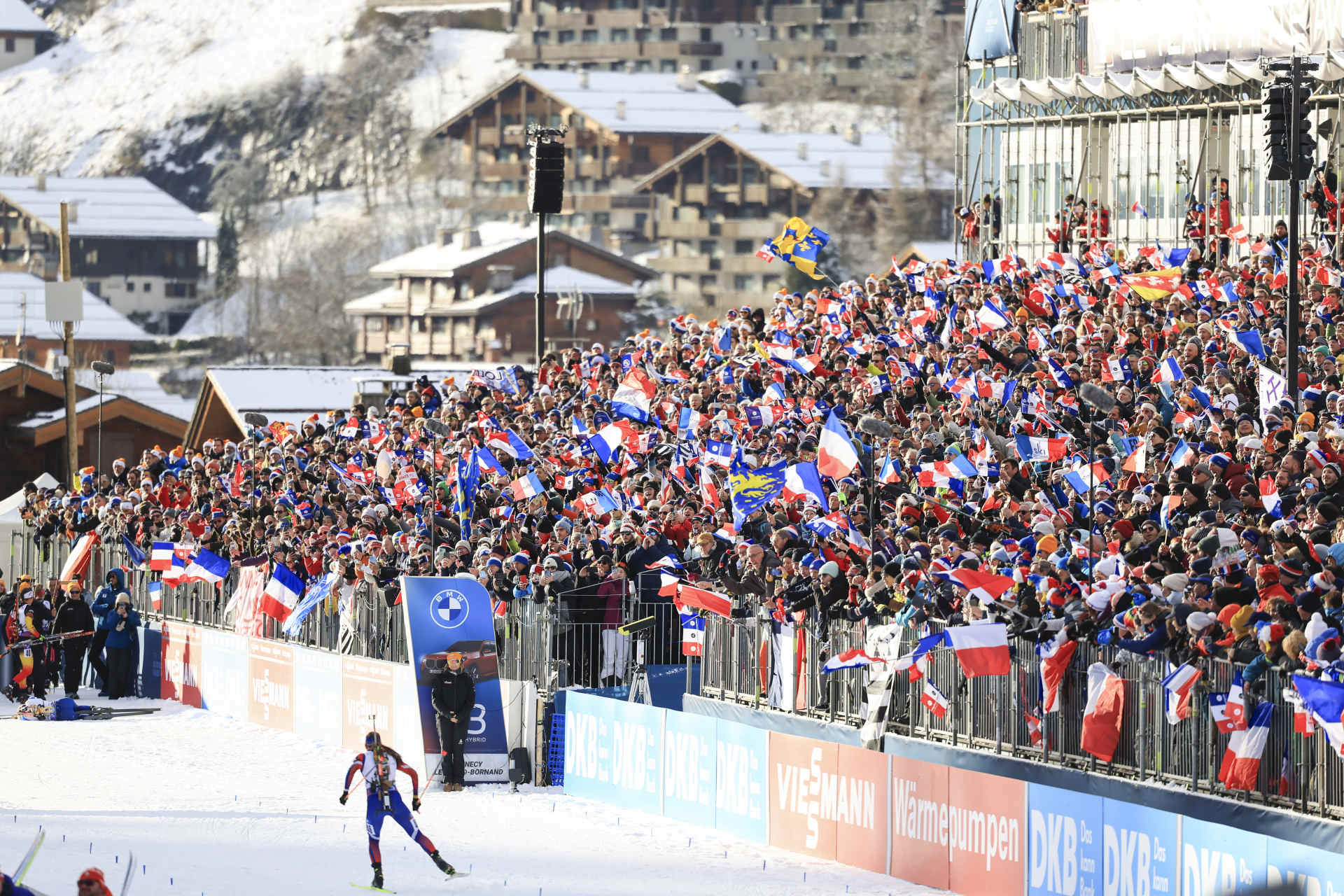
It all began in 1995, when the quiet alpine village of Le Grand-Bornand suddenly found itself in the spotlight, hosting the very first European Biathlon Championships. On home snow, a young Raphaël Poirée seized his first international victory, hinting at the legendary career that lay ahead. Three decades later, the village has transformed into a beloved stage for the world’s biathlon elite, a regular stop on the World Cup circuit, and is now gearing up to welcome the Olympic Games—fulfilling a long-held dream in the heart of the French Alps.
Stade Sylvie Becaert: Inside the “Monaco of Biathlon”
High in the Aravis mountains, in the picturesque village of Le Grand-Bornand, stands the Stade International Sylvie Becaert—the heart of the BMW IBU Biathlon World Cup in France. Named after local hero Sylvie Becaert, 2003 World Champion in Sprint and Olympic bronze medallist, the stadium is where world-class biathlon meets breathtaking alpine scenery.
Its temporary, pop-up design and close village location make it a true “Monaco of Biathlon.” Fully integrated into the Aravis landscape, spectators are never far from the action. Each December, the venue transforms into a festival of sport, drawing tens of thousands of spectators. The stadium is designed with sustainability in mind: it runs entirely on renewable hydroelectric energy, recycles a large portion of its waste, and most infrastructure is dismantled after each event.
The atmosphere during races is legendary. Local stars and international champions alike describe the experience of competing in Le Grand-Bornand as unforgettable: “throat-tightening”, “the craziest stage on the circuit” and filled with "energy transcending the athletes themselves".
French biathlon legend and superstar of the past decade Martin Fourcade still feels a special connection to the place:
“Le Grand-Bornand is so special because nowhere else does biathlon take place right in the heart of the village. That creates a unique atmosphere — fans are spread all around the track, not only in the stadium. As a local athlete, I felt this cheering wave like nowhere else.”
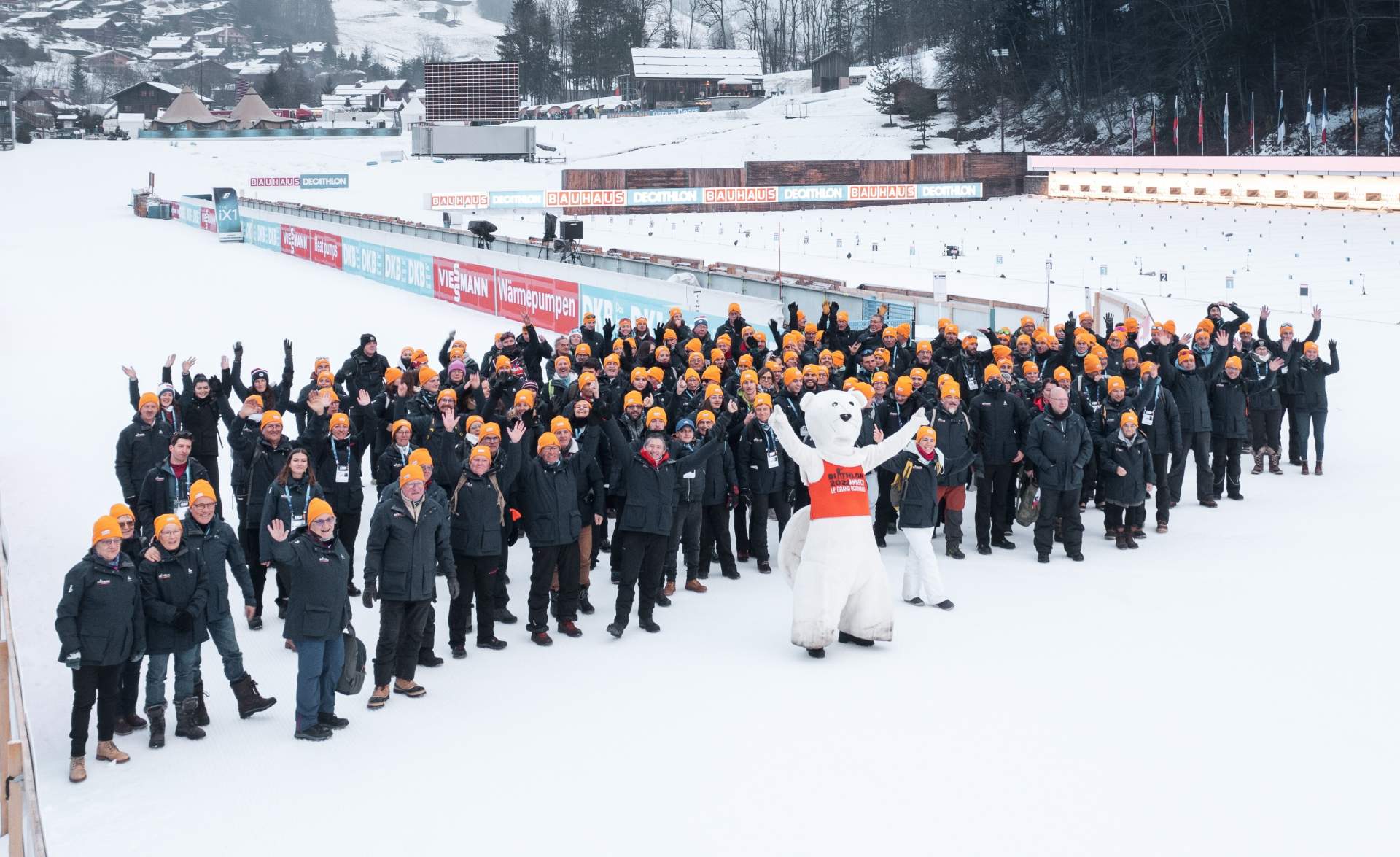
The local community is central to the event’s success: nearly a thousand volunteers help organize the races each year, making Le Grand-Bornand a celebration of both sport and village life. Adding a touch of charm is UBI, the official mascot, inspired by a curious ermine—symbolising the speed and precision of biathletes racing through the alpine arena.


The Future in Focus: From World Cup Legacy to Olympic Stage
In 2030, the Olympic Winter Games will return to France for the fourth time—and for the first time in 38 years, since Albertville 1992. For French biathlon, this homecoming carries special significance. It was at those Games that women’s biathlon made its Olympic debut, and where France earned its sole biathlon medal of the Albertville Games — a gold in the women’s relay at Les Saisies.
The French Alps 2030 Games celebrate the region’s mountain culture, sustainability, and the passion of the local community. Top French athletes, including Martin Fourcade, Anaïs Bescond, and Vincent Jay, have voiced their excitement, with Fourcade seeing his sport shine on the Olympic stage in the very mountains where he once triumphed. It’s a return that highlights Le Grand-Bornand’s decade of World Cup excellence — built on snow, spirit, and success.
A Decade of Glory: Le Grand-Bornand’s Biathlon Legacy
Le Grand-Bornand hosted its first World Cup in 2013, marking the return of top-level biathlon to France. Since then, it has welcomed the world’s best athletes six times and is scheduled again for 2025, 2026, 2028, and the 2030 Olympic Winter Games.
Norway has long been a powerhouse in Le Grand-Bornand, taking roughly 33 % of all individual medals, while France follows with over 20 %, fueled by passionate fans and a golden generation of athletes.


Johannes Thingnes Bø has left his mark with nine victories, but it is Martin Fourcade who truly embodies the venue’s magic for the home crowd. In 2017, he delivered France’s first men’s Mass Start victory on these trails—just hours after Justine Braisaz-Bouchet claimed the women’s title—moments that transformed Le Grand-Bornand from a World Cup stop into the heart of French biathlon, where national pride and alpine scenery meet unforgettable sporting triumphs.
Annecy & Le Grand-Bornand: Alpine Charm Meets Lakeside Life
Just thirty kilometres apart, Annecy and Le Grand-Bornand form a perfect alpine playground. Annecy, the jewel of the Alps, rests on the shores of one of Europe’s purest lakes, blending historic charm, culture, and year-round outdoor sports.
A short drive away, Le Grand-Bornand combines more than 400 chalets dating back to the 17th century with modern leisure facilities, offering a unique “BO!VIVRE” lifestyle—a mix of tradition, artisanal culture, and sporty living. The village thrives year-round with events, workshops, and cultural activities that showcase the region’s energy and creativity.

Photos: Felgenhauer & Manzoni / IBU, Guilbaud / Le Grand-Bornand Tourisme


 Inscrivez-vous à notre newsletter
 Suivez-nous sur :


