The Love of the Challenge: How Aaron Pike Reinvented Himself and is Chasing a Paralympic Medal

For Aaron Pike, who sustained a spinal injury in a hunting accident at the age of 13, snow was long an obstacle - something that restricted movement rather than enabled it. He built his sporting identity in summer disciplines, reaching the 2012 Paralympic Games in London. Yet more than a decade later, Pike is among the world’s leading men’s sit-ski biathletes, approaching his fourth Paralympic Winter Games. His path to biathlon began almost by chance - and ultimately changed everything.
Before becoming one of the defining figures of para biathlon, Pike was best known as a track racer and wheelchair basketball player. His journey into winter sports began after the London 2012 Games, when he received an unexpected invitation from former biathlete and coach Rob Rosser. At the time, Rosser was scouting beyond traditional recruitment pathways, visiting universities rather than the military programs that had historically supplied most U.S. Para Nordic athletes.
Pike recalls the introduction as informal and exploratory: ski ergs, electronic rifles, videos, and a sit-ski assembled to give athletes a first impression. Like many athletes preparing for the Summer Games, he tried it briefly before returning his focus to wheelchair racing. Only after London did the timing truly align.
“I was done with school, still wanted to stay fit, but I was ready for a break from racing,” Pike explains. A training camp in Bozeman, Montana, offered that change - and marked his first real contact with snow since his injury.
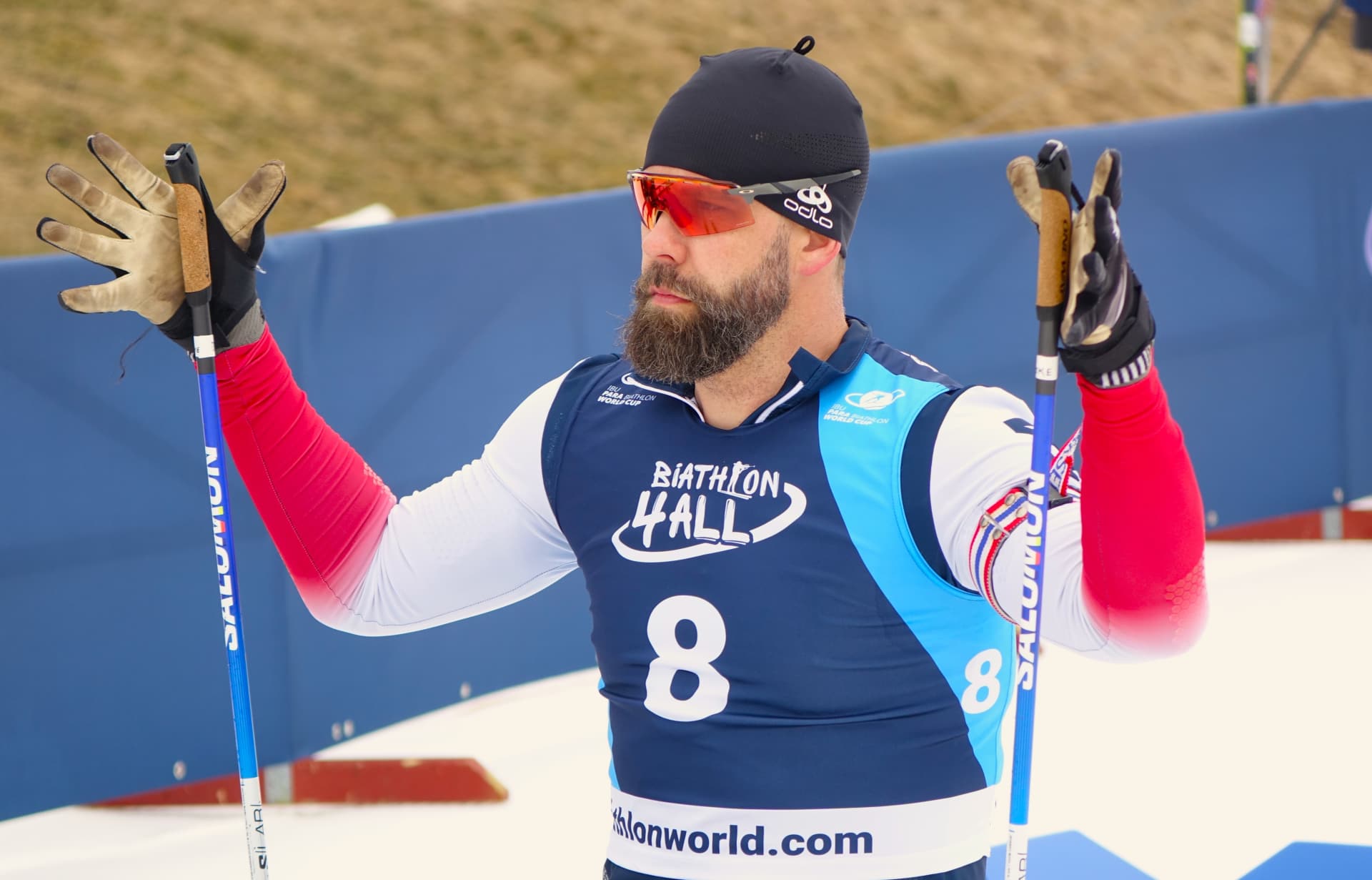
From First Fascination to Full Commitment
What followed surprised him. Technically, he struggled, finding the terrain demanding and unforgiving. Yet the difficulty itself became part of the appeal. More importantly, Nordic skiing transformed snow from something to be avoided into something expansive. For the first time in years, Pike could move freely across a winter landscape. Snow, he says, stopped being a barrier and became an invitation.
Biathlon entered his life partly out of practicality. At the time, competitions offered equal opportunities in cross-country skiing and biathlon, effectively doubling the number of race starts. But curiosity quickly turned into fascination.
“Biathlon grabbed my curiosity very quickly. There’s always a love-hate relationship with it. When everything is going right, it’s an amazing feeling. But it doesn’t take much to ruin a race. You can be the fastest skier on the course, miss a couple of targets, and suddenly you’re out of it,” Pike says. “That’s also why winning a biathlon feels so special. Everything has to click - the skis, the team, the conditions, your physical form, and your shooting, especially shooting at speed. When it all comes together, there’s nothing quite like it.”
/Training/Aaron_Pike_USA_prone)
That mindset led Pike to commit fully. The following year, after the wheelchair racing season, he drove across the United States from Illinois to Colorado with one goal: to spend as much time on snow as possible. With minimal support, he trained alongside more established athletes, learning through immersion rather than structure. The gamble paid off. Pike earned his place on the team, launching a winter career that would soon eclipse his already impressive summer résumé.
Dual-sport Athlete
Despite his success in biathlon, Pike has never abandoned his identity as a dual-sport athlete. Wheelchair racing remains a central part of his year, and he credits that balance for his longevity.
“Being a dual-sport athlete is absolutely an advantage for me. I don’t think I’d still be doing sports at this level if I only had one discipline. There was one year when I only did track, and it didn’t feel right. Switching sports gives me renewed energy every season. I put the racing chair away and jump on skis, and I’m excited. Physically and mentally, it keeps me fresh. But do I see myself primarily as a para biathlete? Hard to say. I’ve definitely had more success in biathlon than in anything else I’ve done - without a doubt. But it’s not an easy identity to narrow down to just one thing.”
Recent seasons have marked the strongest period of Pike’s biathlon career. In 2023, he won three World Championship medals in Östersund, including gold in the individual race. A year later in Prince George, he claimed bronze in the sprint pursuit. In 2025, in Pokljuka, he became world champion in the sprint and added bronze in the individual. He currently leads the World Cup overall standings.
“These successes don’t really add pressure. The pressure is always there anyway,” Pike says. “What they give me is confidence - the knowledge that when I line up, I’m one of the people who can win. That I always have a chance.”
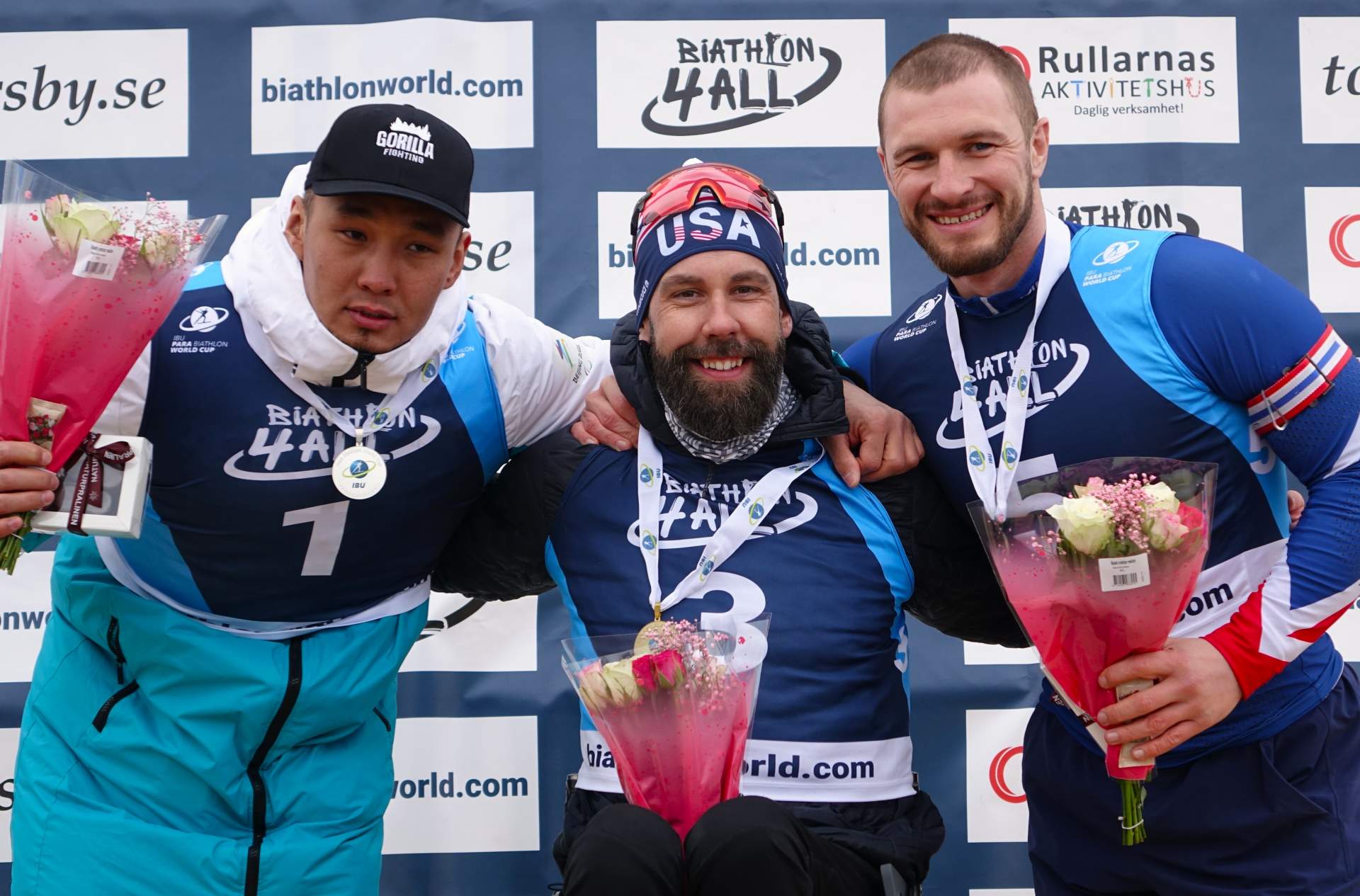
One Podium Still Missing
The upcoming Paralympic Winter Games in Val di Fiemme will likely be his last. “I’ve stood on the podium everywhere else - just not at the Paralympic Games. If I could make the podium there, I’d be more than happy,” he adds. “Val di Fiemme is a fast venue. The sprint and pursuit courses are fairly flat and quick, while the longer races are more varied. What I really like there are the technical sections - the high-speed downhill turns and carving. That’s where I tend to gain time. I usually don’t fall, and I’m able to keep speed through those sections. There are definitely spots where I think I can capitalize.”
His preparation has gone smoothly, helped by staying healthy throughout the whole year. He committed fully to skiing, attending both spring camps - one in Sweden and another in Bend, Oregon - which proved to be an essential step forward. Over the summer, he significantly increased his time in the sit-ski and was able to get on snow much earlier than usual.
“Usually, the early season feels rough. Right now, I feel stronger than I normally do at this point. I’m pleased with where I am - and it gives me a good feeling heading into March.”
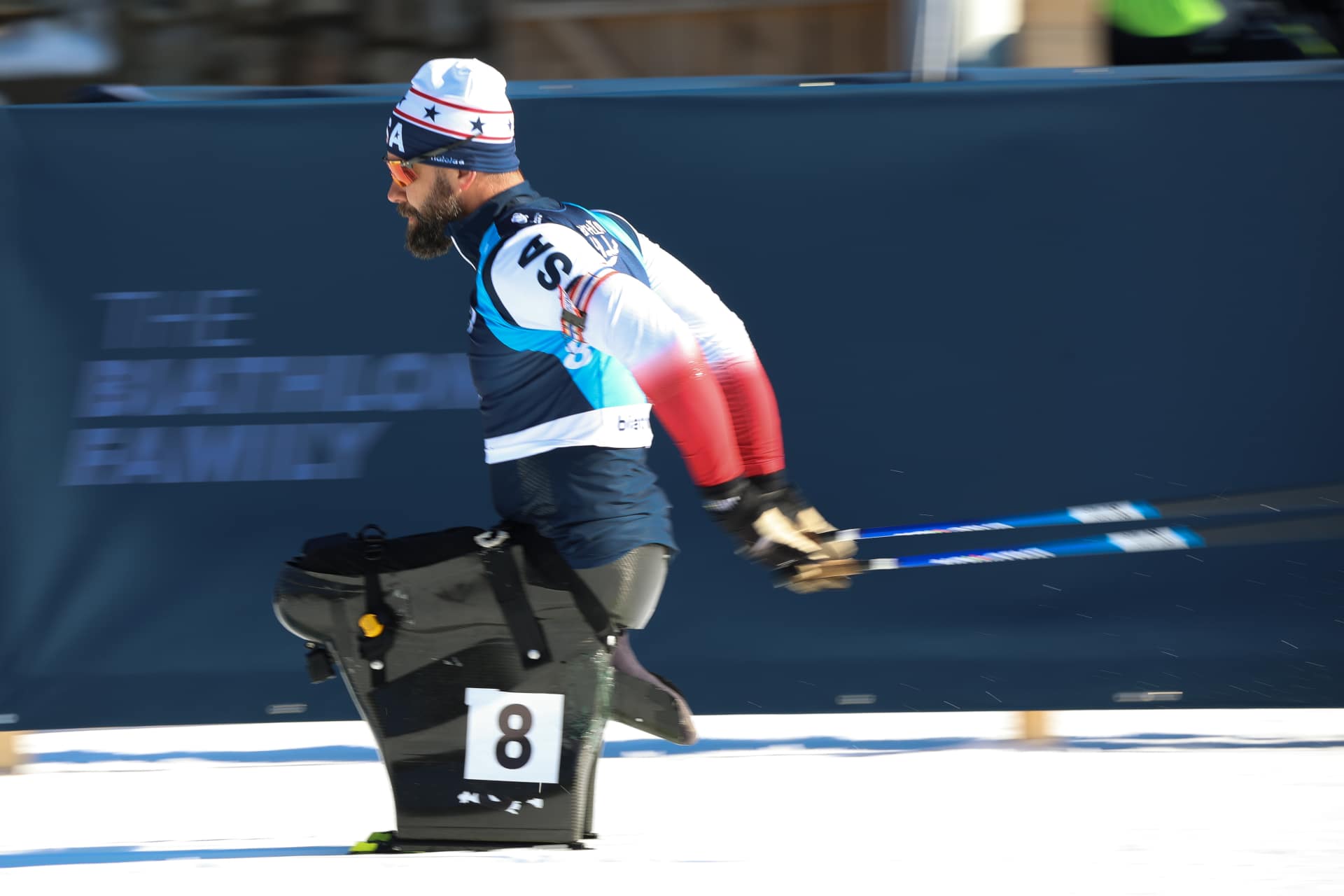
More Than Medals
Pike is known for his openness. He is not an athlete who isolates himself behind headphones. Instead, he treats competition as something to be shared.
“I like to stay loose. I’m talking to people, giving high fives and fist bumps, smiling, and trying to enjoy the moment. During every race, I make a point of smiling before entering the range, to remind myself that this is a game we’re lucky to play,” says Pike.
Off the course, he enjoys time with the team - often playing card games or board games like Settlers of Catan or Betrayal at House on the Hill, frequently alongside athletes from other countries.
Some of Pike’s most vivid Paralympic memories are not his own. He speaks most powerfully about PyeongChang 2018, where he watched his partner, Oksana Masters, win gold.
/Sprint%20Pursuit/Oksana_Masters_hug_Aaron_Pike_USA_pamdoyle)
“She had completely shattered her elbow - an injury most people wouldn’t compete through. Her arm was locked into a specific position, taped and braced. She couldn’t bend it at all - only move from the shoulder,” Pike recalls. “And she still won her first Paralympic gold. She is truly an incredible athlete - and I’m glad I don’t have to race against her.”
The two are currently planning a wedding in Italy, scheduled shortly after the Paralympic Games.
“It’ll be something small - more like an elopement with immediate family and maybe a couple of friends. But when else would we have all of our family in Italy at the same time? It feels special. We’ve been together a long time. It feels overdue. And if this really is my last Winter Games, it would be a pretty incredible way to celebrate.”
Photos: Kacin | IBU, Doyle | IBU, Krystek | IBU


 Sign up for our newsletter
 Follow us on:


