Natalie Wilkie Turns Biathlon Dream into Paralympic Gold
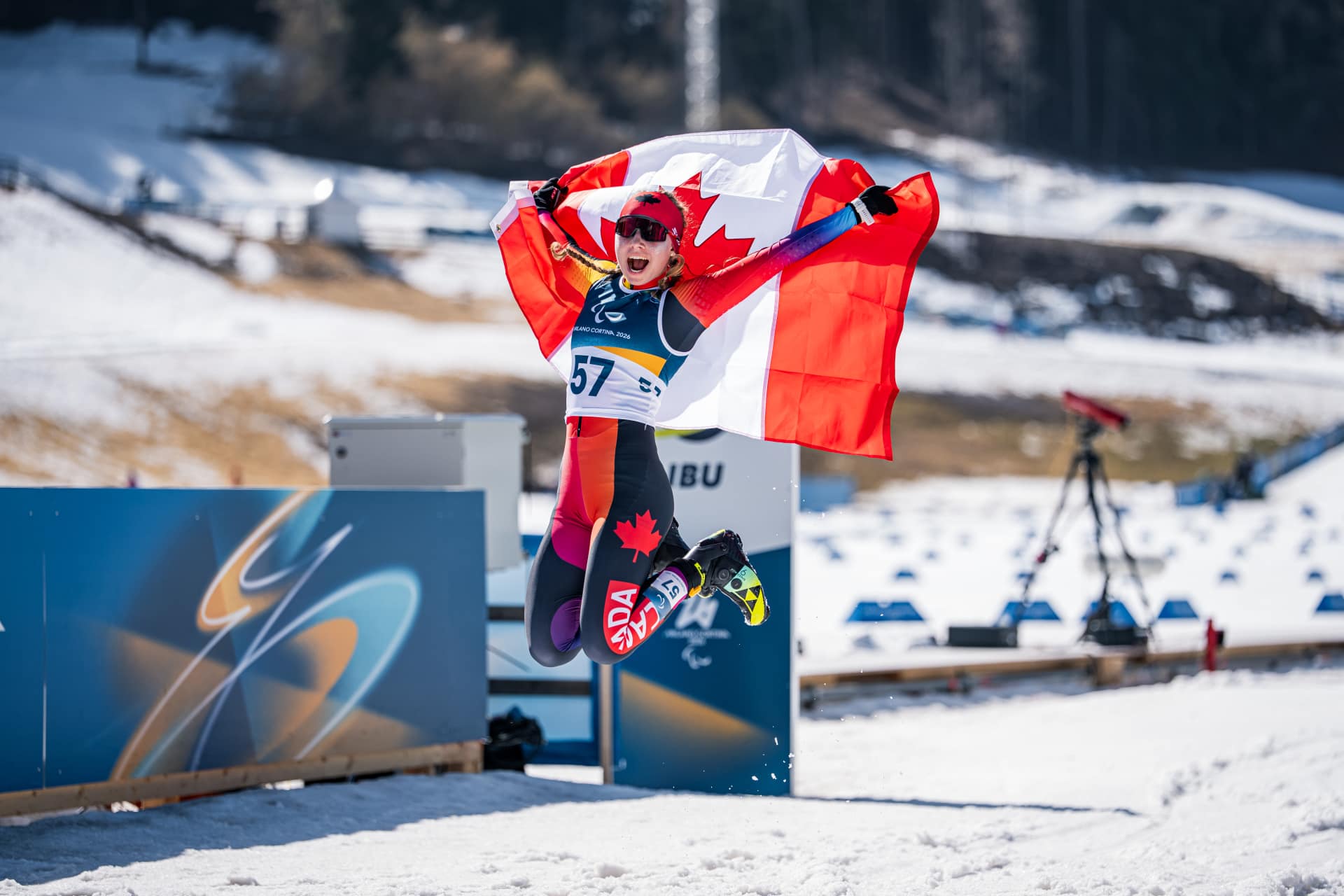
Over the past two Paralympic Winter Games, Natalie Wilkie has built her legacy in para cross-country skiing. Now, after four years of focused work on the shooting range and the tracks, the Canadian has also established herself among the leading athletes in para biathlon. At the Milano Cortina 2026 Paralympic Winter Games in Val di Fiemme, Wilkie achieved something she had targeted for years: a Paralympic biathlon gold medal.
“Honestly, I could leave the Games now and already be happy,” Wilkie said after securing two medals in Val di Fiemme. On Saturday, she took second place in the 7.5 km sprint, losing only to Oleksandra Kononova. A day later, in the 12.5 km individual race, she gave her rivals no chance. Shooting clean, she won by half a minute over Zhiqing Zhao of China, giving Canada its first-ever gold medal in women’s para biathlon.
Wilkie's journey into para sport began with a life-changing accident in June 2016. As a Grade 9 student, she lost four fingers on her left hand in a woodworking accident involving a jointer during a school class.
“I started as a para cross-country skier after the accident with my hand, so I ski with one pole,” she explained. “A few years later, my teammates introduced me to biathlon, and I thought it looked really fun to try. In my first Paralympic biathlon race, I finished near the back and missed seven out of ten shots. But after years of consistent training, things really started to change, and I began having much more success in biathlon.”
Even before her breakthrough in biathlon, Wilkie had established herself as one of the most successful athletes in para cross-country skiing, collecting seven Paralympic medals, including three gold medals at the PyeongChang 2018 and Beijing 2022 Paralympic Winter Games.
Her rapid rise in biathlon has been equally impressive. Wilkie now owns five world championship titles in the sport and has claimed 14 World Cup victories. This season, she also won the overall Crystal Globe. In a recent time, Wilkie shifted her preparation decisively toward biathlon - a move that has clearly paid off.
“My big goal for these Games was to win a biathlon medal, so this results mean a lot,” she said.

One of Wilkie's trademarks on the shooting range is patience. She knows that her biggest room for improvement still lies in reducing her shooting time.
“I'm still quite a slow shooter, but I've become very accurate, and that's definitely become one of my strengths. I usually know I'll lose some time on the range because I shoot carefully, especially when I'm a bit nervous. If the targets are going down, that helps a lot - especially in a race with one-minute penalties.”
Wilkie credits part of her progress to training alongside fellow Canadian and renowned shooter Brittany Hudak. “Training with Brittany has helped me a lot. She’s an incredible shooter, and I’ve learned so much from her over the past few years.”
Competition in Wilkie's category is fierce, something she believes makes the sport even more exciting. There are 11 standing women competing in Val di Fiemme, and remarkably, each of them has stood on a World Cup podium at least once. “The level in this field is really high. There are many athletes here who could be on the podium, which makes the competition very exciting.”
When it comes to race formats, the Canadian feels particularly comfortable in the Individual. “The 12.5 km race probably suits me best because of the shooting, but I also enjoy the sprint because it’s fast and pushes you to shoot quicker.”
Wilkie still has one more biathlon start ahead of her. On Friday, she will compete in the Sprint Pursuit - the format she says suits her the least, although she already won one such race earlier this season in Canmore.

While many athletes focus intensely before races, Wilkie prefers to keep things light. One of her unique traditions is wearing glitter on her cheeks before competitions.
“One of my biggest things is always to have fun while I'm competing. Some athletes like to lock in completely, but I enjoy the moment. Putting on glitter has become a little tradition with my teammates before races. It reminds me to trust the process and enjoy the experience.”
During these Paralympics, the glitter's color matched the medal she won. In Sprint, she wore silver glitter and finished second. For the Individual race, she chose gold and also this time the result matched the color perfectly.
For Wilkie, the journey from struggling on the range to standing atop the Paralympic podium shows how persistence - and perhaps a bit of glitter - can turn a dream into reality.
Photos: IBU | Barbieri


 Sign up for our newsletter
 Follow us on:


