Think a low-altitude Olympics means no altitude training? Coaches say it’s not so simple
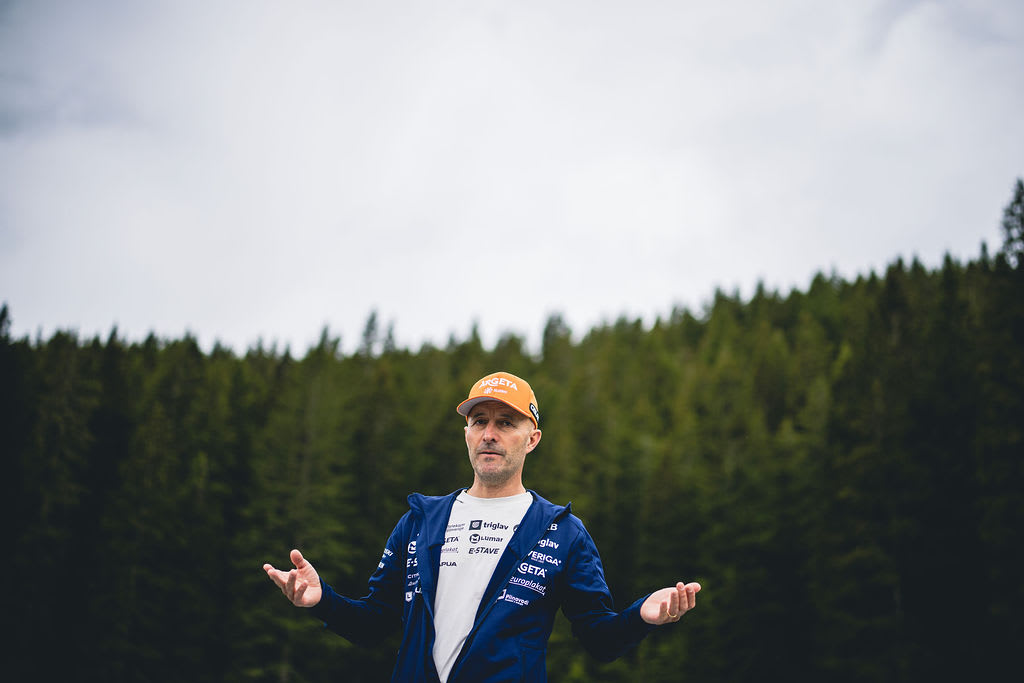
With the next Olympic cycle featuring all major biathlon championships below 1,100 metres, will teams rethink their altitude training compared to their preparation for Milano Cortina? Siegfried Mazet, Armin Auchentaller, Patrick Oberegger and Mats Overby explain how — and how much — their plans will change.
After two consecutive Olympic cycles built around major championships at altitude, biathlon is entering a very different four-year period. From the 2027 World Championships onwards, every major medal event will be held below 1,100 metres above sea level, culminating with the 2030 Olympic Winter Games in Le Grand-Bornand.
We asked three top level coaches whether this new cycle will dramatically change their plans: Armin Auchentaller, who just moved to coach Slovenia after many years as head coach of Team USA. Siegfried Mazet, who recently returned to France after 10 years coaching the Norwegian powerhouse, and the pair chosen to replace Mazet, Patrick Oberegger and Mats Overby, who now head up Team Norway.
After two Olympic cycles centred around high-altitude venues, the next four seasons will culminate with all major championships below 1000m. Does that change your long-term planning, starting with this summer?
Siegfried Mazet: After two Olympics above 1,600 metres, we're back to more "normal" altitudes, so it will definitely change our planning. We'll still have camps at moderate and high altitude, partly because they also offer cooler temperatures and better training conditions. Even now, we're in Ceillac (France) enjoying fresh air while much of Europe is dealing with very warm weather.
Patrick Oberegger & Mats Overby: Yes, it gives us the opportunity to explore different periodisation models and exercise designs. At the same time, our main focus remains on the basic skills and needs.
Armin Auchentaller: Not really. My long-term planning won't change much. I'll keep roughly the same amount of altitude training because I still believe it's a very important part of our preparation.

Altitude training will obviously remain an important part of preparation. However, do the objectives of those camps change when the key championships are no longer at altitude, or do you approach them in largely the same way?
Auchentaller: For me, the approach remains largely the same. The main goal is still to improve the body's ability to transport and use oxygen more efficiently, ultimately improving endurance.
Mazet: The focus definitely changes because the camps don't need to be as long. Previously, we had to arrive much earlier to adapt properly before championships at altitude. Now it's more about choosing the right venue and doing quality work there, rather than preparing specifically for races like the Olympics in Antholz.
With Norway, altitude was a major topic because the athletes generally live and train close to sea level, so we needed to spend three weeks at altitude for significant benefits. In France it's different. Many athletes already live around 1,200 metres and regularly ski even higher, so altitude is simply part of their everyday environment rather than a trigger for special training.
Oberegger & Overby: We see two main purposes for altitude training:
preparing specifically for priority events held at altitude;
developing physical capacity and shooting performance.
We'll keep the same overall philosophy but adapt one or two camps with a different focus and training environment. We always try to plan with a long-term perspective of four to eight years.
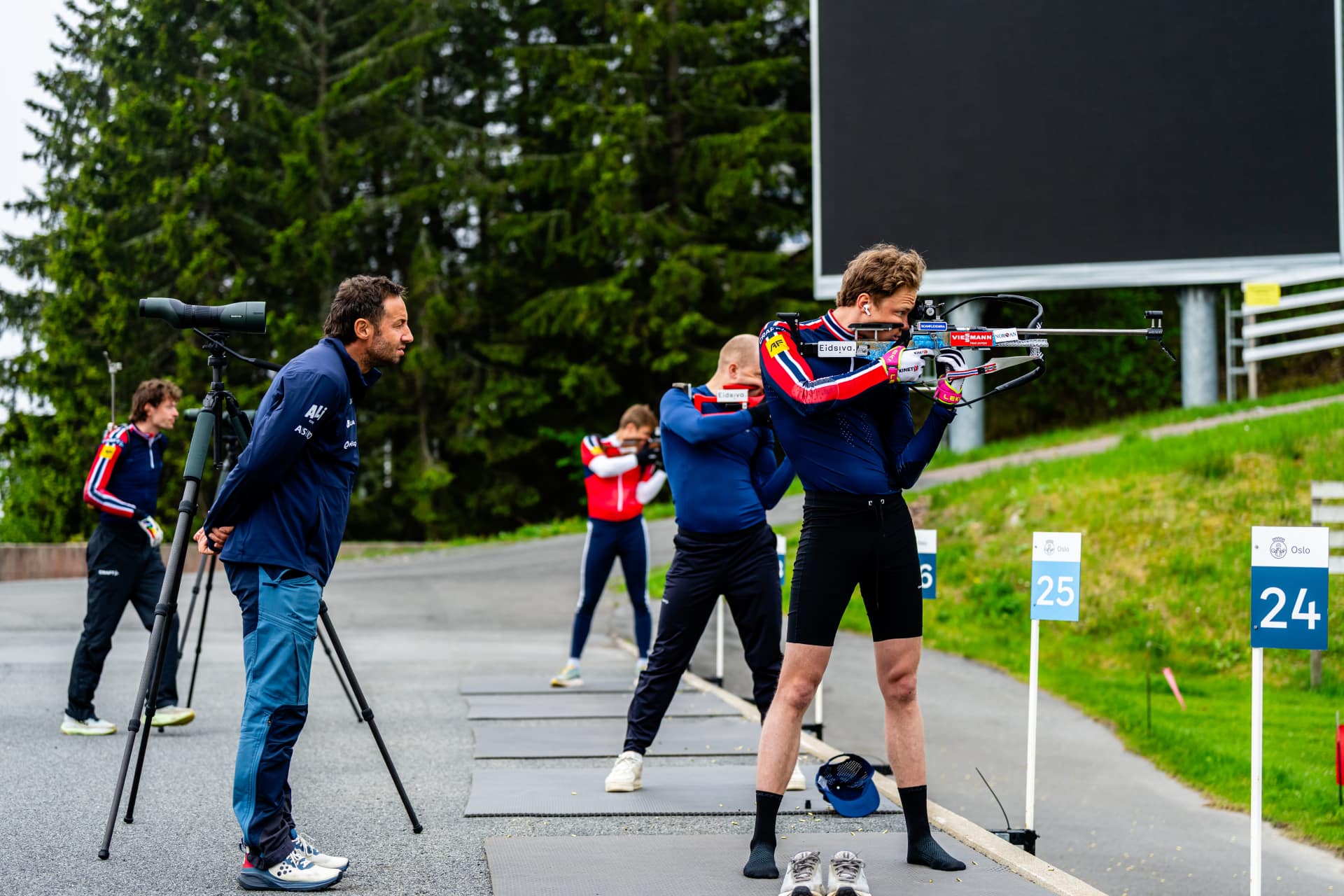
For athletes who grew up and trained regularly at lower altitude, does a championship cycle focused on lower venues present different challenges or opportunities?
Auchentaller: It will definitely be an opportunity for athletes who grew up and trained at lower altitudes because they won't need to go through the same adaptation process required for major championships held at altitude.
Oberegger & Overby: Yes, although it's also important not to forget the principles that have worked well in previous Olympic cycles.
Mazet: For athletes who already live at altitude, not much changes. What this cycle does offer is more flexibility to train in different locations and to work more on intensity. At the moment, though, we are still evaluating the French team, so we haven't finalised our long-term plan yet.

During the last couple of major medal events, media liked to talked a lot about ski preparation on top of altitude adaptation and form of the athletes. From a coaching perspective, how significant is altitude compared with other performance factors such as fitness, ski preparation or shooting confidence?
Oberegger & Overby: That's a difficult question to answer precisely. In elite sport, every margin that can save seconds matters. The key is understanding your team's strengths, weaknesses and opportunities, then making sensible decisions based on a cost-benefit analysis and clear priorities.
Mazet: Everything matters. Great skis won't help if you're not fit, just as great fitness won't compensate for poor ski preparation. Every department has its role: coaches build fitness, wax technicians prepare the skis, and then there's shooting and the confidence athletes bring into the major events.
For me, one of the biggest priorities is making sure athletes are already performing well in January, because success before the championships creates confidence and serenity going into the medal races.
Auchentaller: Ski preparation is probably one of the biggest performance factors because it can create huge time gaps. Being in peak physical condition is equally fundamental. Compared to those two elements, I think altitude has a smaller impact. It really becomes decisive only once good form and good skis are already in place.

Four years may seem like a long time, but Olympic success is built long before the Games begin. And while their approaches differ, one thing is clear: the road to French Alps 2030 is already well underway.
Photos by Authamayou and Nordnes/NordicFocus Grega Valančič/Sloski Biathlon


 Sign up for our newsletter
 Follow us on:


