The Winter Olympics' historic role in Biathlon's Gender Equality
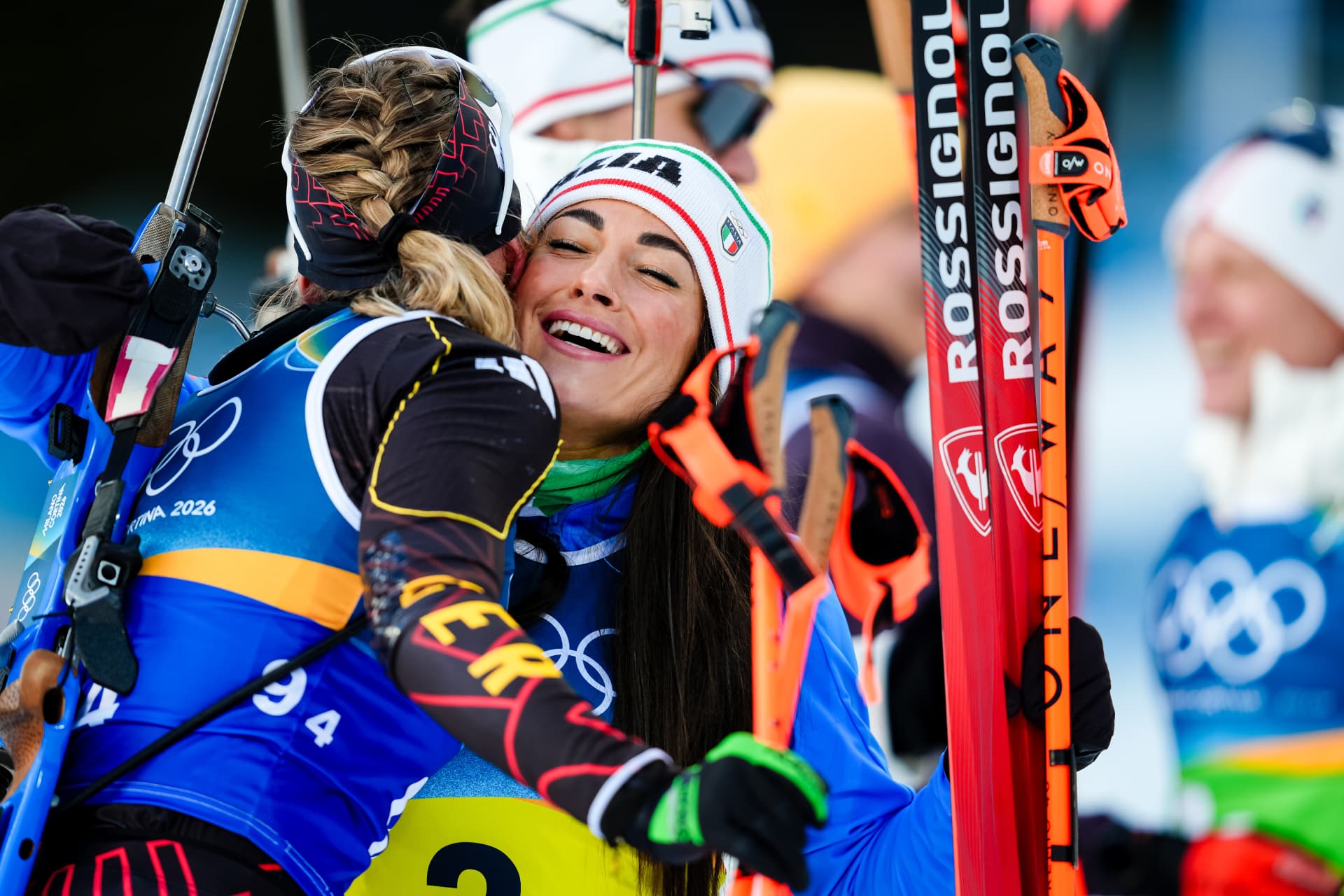
Biathlon is considered one of the pioneers in gender equality in sport. Women compete in the same events, at the same venues, receive the same prize money and receive the same amount of TV coverage. But this was not always the case. Participation in the Winter Olympics laid the foundation for female athletes to achieve equality in their sport.
Uschi Disl, Kati Wilhelm, Anastasiya Kuzmina, Darya Domracheva and Marte Olsbu Roeiseland: these are biathletes who have made Olympic history. They are multiple Olympic champions in biathlon and are among the most successful winter athletes in their countries. But the road to this recognition was a long one.

Against all odds
While biathlon was already well established among men in the 1970s, women were still fighting for acceptance. Alexander Tikhonov, Olympic biathlon champion and former vice-president of the IBU, said in 1979: "Biathlon is a men's sport," even though there were already women shooting rifles in Russia, Scandinavia and Czechoslovakia.
The switch from large-calibre rifles to small-calibre rifles, which are still used today, in 1977 made the sport more attractive to women. Disl was one of the first women to take up biathlon in Germany. When she switched from cross-country skiing to biathlon in the winter of 1986/87, she and other pioneers of the sport were called ‘shotgun women’. She initially trained with the men and was often ridiculed for her hairstyle or figure.
It was not until 1980 that the Biathlon Federation adopted rules for women's competitions at its congress in Sarajevo. The first international women's competition then took place in 1981 in Jáchymov in what was then Czechoslovakia.
Establishment of the World Cup and Olympic debut
The first Women's World Championships were held in Chamonix in 1984. The women's competitions were held at the same time as the junior competitions, which were separate from the men's competitions until 1988. Since 1989, the Women's World Championships have been held together with the men's competitions. Women were integrated into biathlon with the World Cup, which has been held since 1987.
In Albertville in 1992, women's biathlon competitions were included in the Olympic Games programme for the first time, 32 years after men's biathlon competitions had begun. Participation in the Olympic Games gave women's biathlon a boost and, at the same time, attracted attention from society and the media.

Equal rights for all
Since then, all IBU decisions have applied equally to men and women. World Cup events take place at the same venue and new race formats are designed for both genders. Since the 1995/96 season, the association has paid equal prize money to athletes, with no distinction based on gender.
To bring women and men even closer together, mixed relays have been introduced since the 2004/05 season. With this strategy, biathlon is considered a role model for other sports in which women are not yet recognised as equals. And so, in Antholz 2026, we will also see female Olympic biathlon champions who will continue to write the history of the sport and inspire young girls to take up biathlon.
Photos: IBU I archive


 Sign up for our newsletter
 Follow us on:


