The Moments That Changed Biathlon History
Some records are broken and it feels as if hardly anyone noticed. When others are shattered, you are left with the feeling that the sport has fundamentally changed, even if only slightly. This season gave biathlon several moments like that — teenagers challenging history, Olympic legends reaching another level and races decided by margins almost too small to believe.
Italy’s New Golden Era
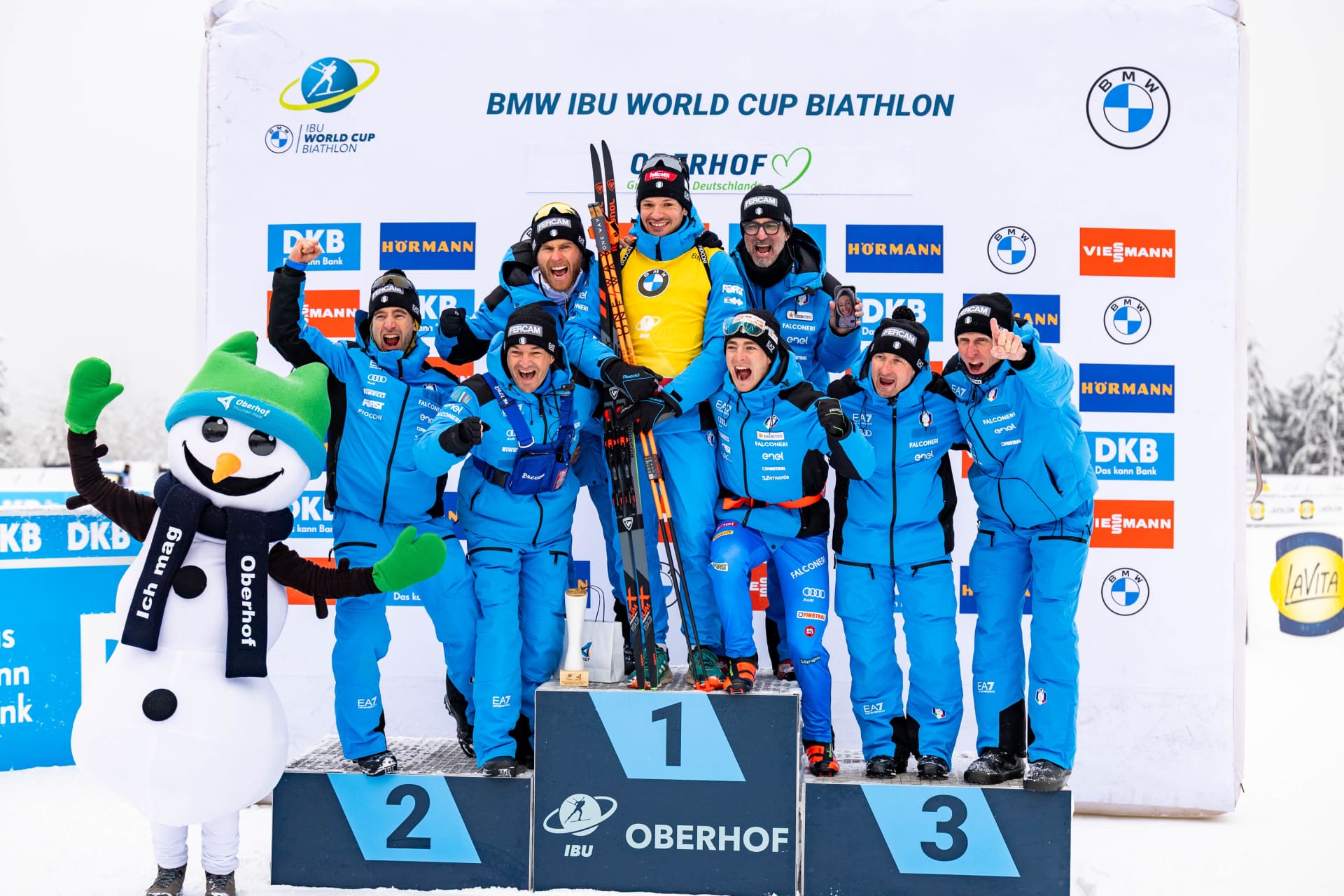
For more than three decades, no Italian man had worn the yellow bib as World Cup leader. The last one was Johann Passler in March 1992 — years before Tommaso Giacomel was even born. Then came Oberhof. When Giacomel climbed into the overall lead in January 2026, it felt like more than a personal breakthrough. It felt like the arrival of a new Italian generation ready to challenge the sport’s traditional powers. And he was not alone.
At the Olympic Games in Antholz, Lisa Vittozzi delivered another historic first by winning Italy’s first-ever Olympic gold medal in biathlon. On home snow, in front of home fans, Italian biathlon suddenly stopped chasing history and started creating it.

The Teenagers Who Ignored the Limits
Biathlon is usually a sport of patience. Athletes often need years before they can survive a full World Cup season, let alone compete near the front. This winter, several teenagers ignored that timeline completely.


Latvia’s Rihards Lozbers delivered one of the season’s most surprising stories in Antholz, where the 16-year-old finished 32nd in the Olympic sprint — making him the youngest biathlete ever to reach the Top 40 at elite level. A few weeks later, during the season finale in Oslo, he rewrote history again by becoming the youngest-ever World Cup mass start qualifier, breaking the previous mark held by Campbell Wright by more than two and a half years.
And he was not the only teenager accelerating the timeline. Poland’s Grzegorz Galica became the first athlete under 19 years old to score World Cup points in this century, another reminder that biathlon’s next generation is arriving earlier than ever.
Olympic Greatness Redefined


Quentin Fillon Maillet arrived in Antholz already established as one of the defining athletes of his generation. He left as the most decorated French Olympian in history.
The numbers alone are extraordinary: five Olympic gold medals, nine Olympic podiums in just 15 races and a level of consistency rarely seen in Olympic biathlon. But numbers alone still do not capture what makes Fillon Maillet’s Olympic record so remarkable. The Olympic stage usually magnifies pressure and unpredictability, yet he kept delivering podium performances with extraordinary consistency.
When Every Second Started to Matter
Not every historic moment this season belonged to one athlete alone. Some reflected just how dramatically modern biathlon is changing. The sport has probably never been this close.
In Le Grand Bornand, less than ten seconds separated the top six athletes in the men’s sprint — the first time such a small gap had ever been recorded at elite level. The women’s mass start was even tighter, with only 0.8 seconds between first and third place, less than half of the previous record margin.
And then came Oberhof. The top five teams in the men’s relay finished within just 5.4 seconds. Before this season, the closest Top 5 relay finish in modern biathlon history had been separated by more than 20 seconds.
These were not isolated curiosities. They were signs of a sport becoming deeper, faster and less predictable than ever before.

Biathlon history was not simply rewritten this season. The limits of what feels possible shifted a little too.
Photos: IBU Photopool


 Sign up for our newsletter
 Follow us on:


