Experts' Corner: Arnd Peiffer predicts a pressure-packed season
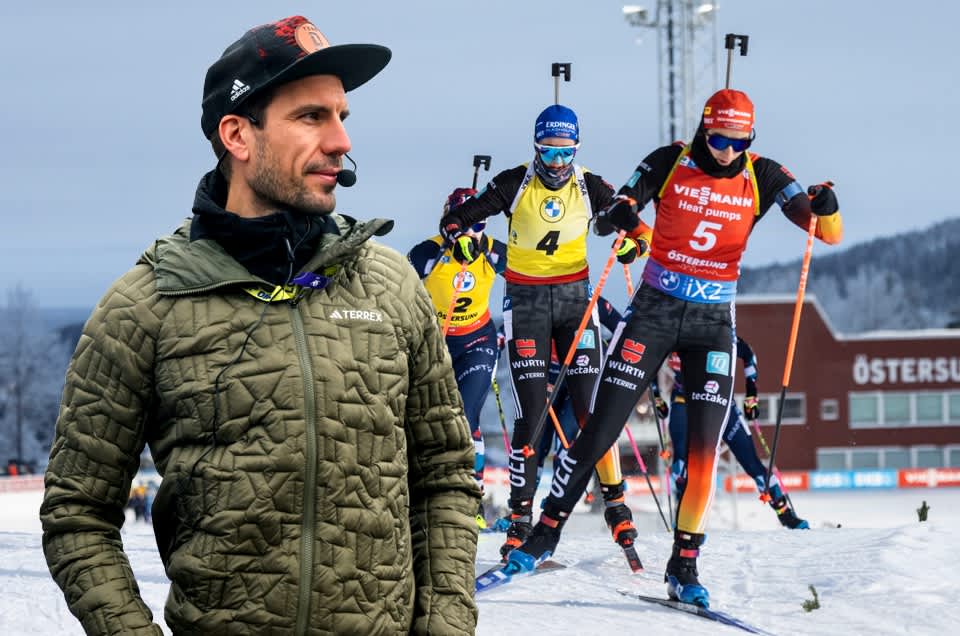
Biathlonworld’s longest-standing expert, Arnd Peiffer, breaks down the season’s biggest storylines and reveals which athletes are truly prepared for the post-Boe shake-up. His expert analysis also highlights the subtle signals that define the early season.
The battle for the BMW IBU World Cup Total Score—and especially for the medals at the Olympic Winter Games Milano-Cortina 2026—could be more exciting than ever this season. Even though Johannes Thingnes Boe didn’t win the crystal globe in his final year, he still spent a long stretch in yellow. The Olympic biathlon venue of Antholz-Anterselva has always been a stronghold for the Boe brothers, and they would have been among the top medal favourites there. Their absence opens the door for new names and new historic storylines.
Even without Johannes and Tarjei in the mix, earning a World Cup start in the Norwegian team hasn’t become any easier. If anything, it is even more fiercely competitive than before. Norway still has such depth that even ten start spots could realistically be filled with athletes capable of podium results.
For Sturla Holm Laegreid, repeating last season’s triumph in the Total Score will be anything but easy. His focus may well be shifting toward the Olympic Games, where an individual medal remains the one major achievement missing from his résumé. That Olympic priority could create opportunities for top athletes from other nations to break through.
A strong summer doesn’t automatically translate into winter success—but Eric Perrot seems to have the complete package right now. He demonstrated his determination and impressive form by winning the Loop One Festival. His consistency and all-round ability make him a genuine contender for the Total Score.
On the women’s side, Franziska Preuss suffered a hand injury at the German Championships, but it likely didn’t disrupt her preparation too much. She has every chance to return to the top level she showed last year. Still, to be a serious Total Score contender, everything has to fall into place across the entire season: form, health, and even luck—as we saw at last season’s finals in Oslo-Holmenkollen.
With the Olympics approaching, many teams will set their priorities around Antholz-Anterselva. We might even see some athletes skip individual races or entire World Cup weekends—Nove Mesto, for example, as it is the last World Cup stop before Milano-Cortina and sits at relatively low altitude—to manage their form and recovery.
As for the season opener in Oestersund, anything can happen. I’ve experienced every possible snow condition there—deep snow, ice, dry powder, even dirty snow. It’s impressive that the organisers reliably prepare a 4 km loop for the first weekend. The course is demanding, and athletes need to arrive fresh and energised. Anyone carrying even a bit of fatigue from autumn training will struggle.
Oestersund’s long climb is the real form check: if your technique holds up and you can recover on the short downhill afterwards, you know you’re ready. But the season doesn’t end there. After the Christmas break, everything resets. A great start in Oestersund doesn’t guarantee a great season—there are many twists still to come.


 Sign up for our newsletter
 Follow us on:


